
Hybrid Solar Panels Dimensioning
When configuring and sizing hybrid solar panels, it is crucial to align the heat load with your heat pump’s energy output throughout the year. This alignment must be ensured by using a corresponding control system. By running simulations with different configuration options early in the project, you can avoid costly sizing errors and potential problems such as freezing or overheating of your ground loops.
Where Are Hybrid Solar Panels Used and What Are Their Advantages?
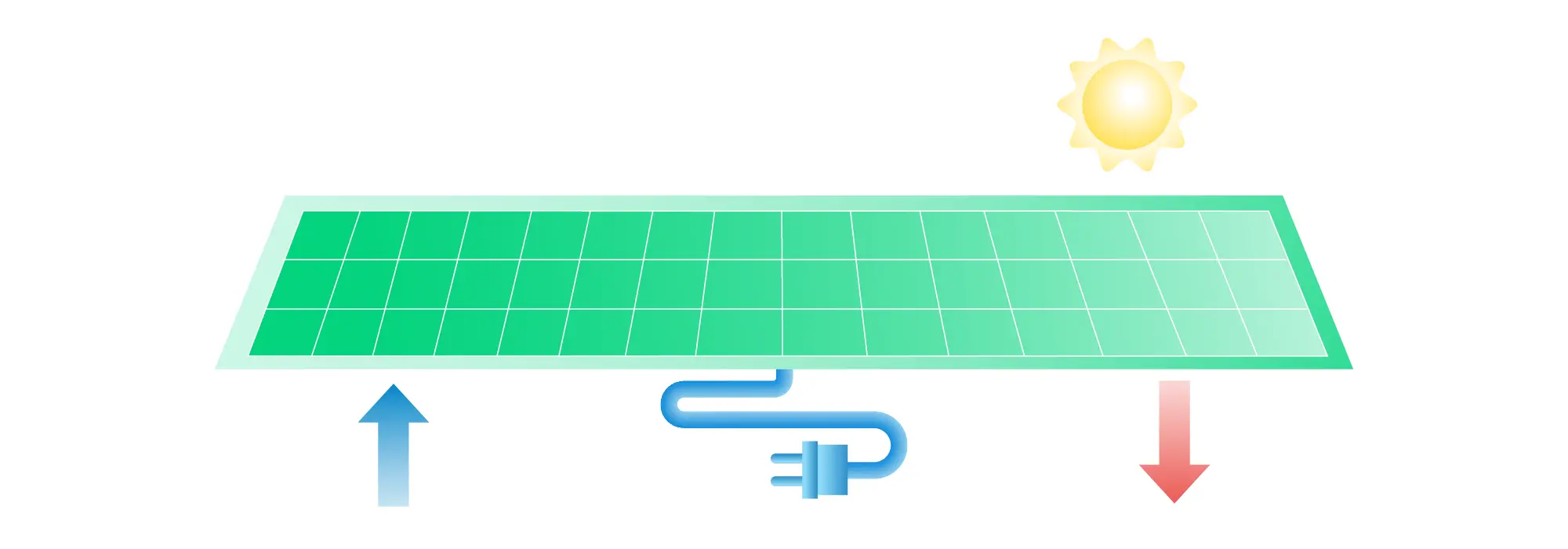
Hybrid solar panels, also called PV-T panels, generate both hot water and electricity simultaneously. This combination is suitable for a wide range of applications, including district heating networks, commercial and industrial buildings. Additionaly, PV-T panels are also suitable for single-family and multi-family buildings.
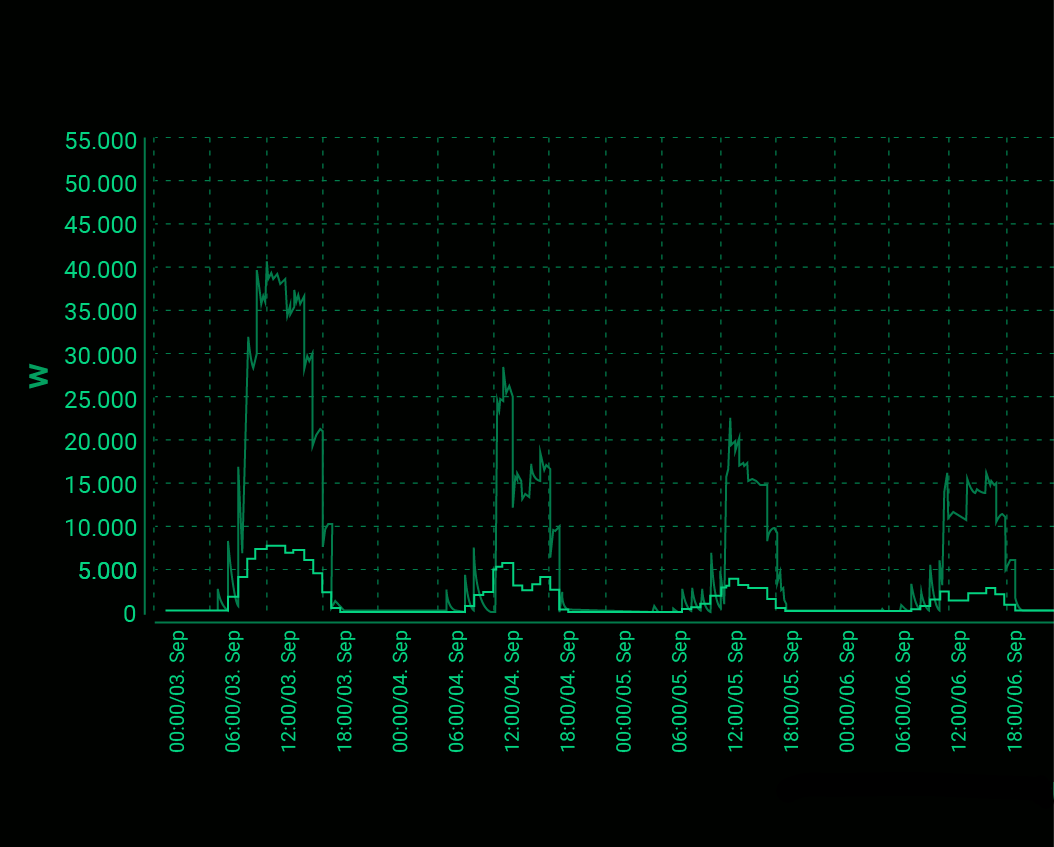
When designing a PVT system, it is important to determine how many PVT collectors are required to cover the heat load. Polysun accurately calculates the heat and electricity yields for each time period of the year and thus enables the optimal dimensioning of all components of a PVT system including heat pumps and geothermal loops.

Enhanced Energy Efficiency
Hybrid solar panels combine the generation of electric power and thermal energy, delivering higher energy yields compared to standard photovoltaic (PV) systems. Water runs through the panels, absorbing heat and cooling the solar cells on hot days. This allows the solar cells to operate at lower temperatures, thus increasing electricity yields.

Versatility in Heating and Cooling
These systems harness thermal energy from solar irradiance or dissipate heat into the surrounding air, enabling passive cooling. When paired with a heat pump, they also facilitate efficient heating and active cooling.

Integration with Geothermal Systems or Ice Storage
The thermal energy from hybrid solar panels can be utilized to regenerate seasonal ice storage or ground sources, ensuring efficient and sustainable system operation. This makes PVT technology an excellent choice for integration with geothermal energy solutions.
What Are the Most Common Uses of PV-T Collectors?
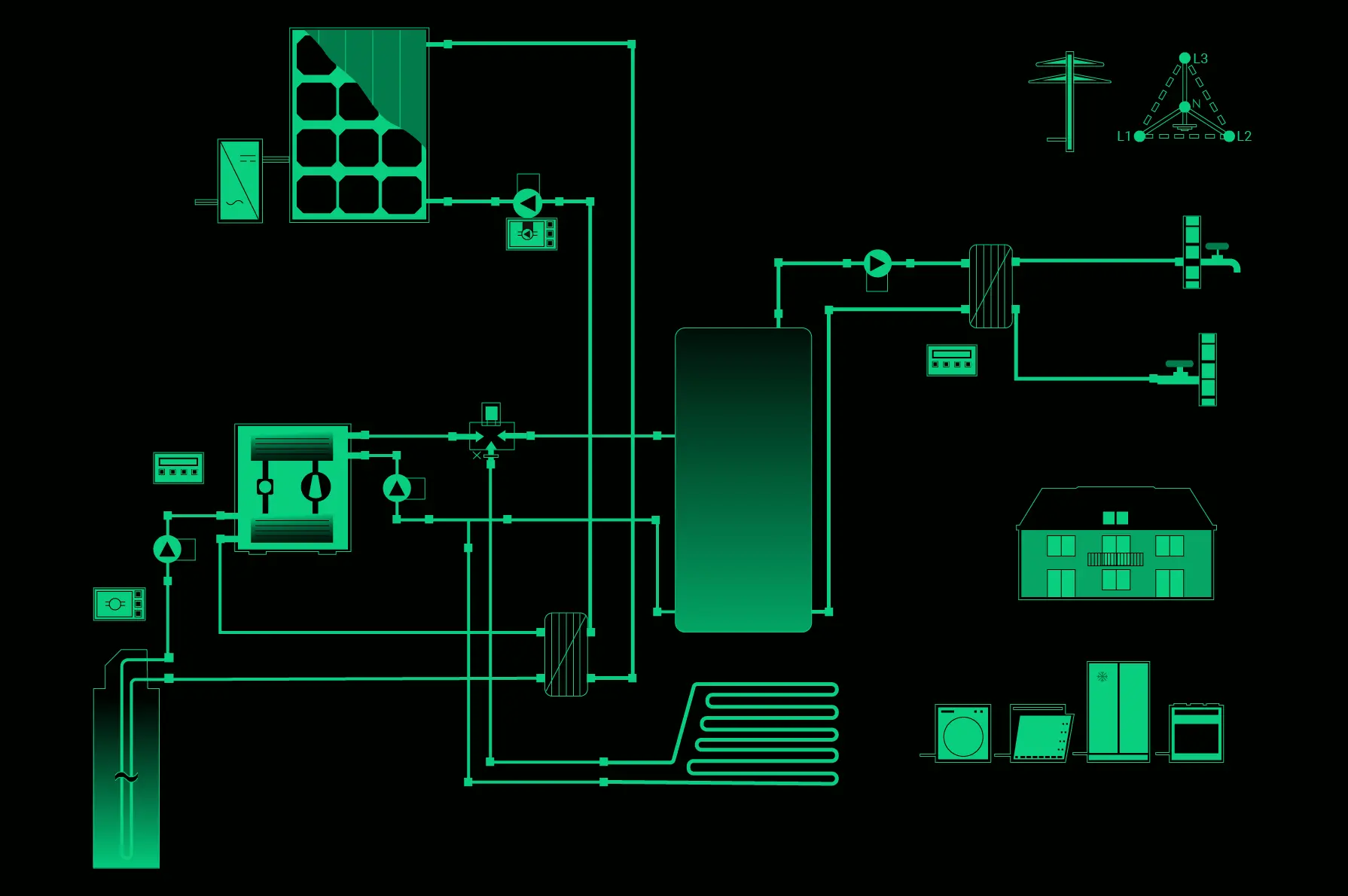
The simultaneous production of electricity and hot water with PV-T (Photovoltaic Thermal) collectors is suitable for various applications, for each of which the number of PV-T collectors must be determined. Polysun supports you with a comprehensive product database of over 70 PVT collectors from well-known manufacturers. Using key data such as nominal power, efficiency and temperature coefficients, the heat and electricity yields can be accurately calculated. This ensures that the size of your PVT collectors is optimised for the size of your heat pump, avoiding costly sizing errors. Whether it’s a detached house or a heating network, Polysun can be used to simulate all possible types of PVT systems:
- Single-Family House: PV-T collectors can be configured as monovalent (sole heat source for the heat pump) or bivalent (in combination with geothermal energy) to provide efficient space heating and hot water generation.
- Multi-Family House: PVT-based systems can be scaled to meet the energy demands of multi-family homes. When combined with a geothermal heat pump, they can also efficiently regenerate the ground source, ensuring sustainable and reliable operation.
- Industrial Buildings: When combined with a heat pump, hybrid solar panels offer substantial potential for energy savings and CO2 reduction in industrial buildings.
- Commercial Buildings: PVT systems provide a comprehensive solution for generating electricity and heat in commercial structures.
- District Heating Networks: PV-T collectors are increasingly used in district heating networks. Combined with a heat pump, they offer an innovative solution for low-temperature heating networks in urban areas.
Why Do Customers Choose to Optimize Their PVT Collectors with Polysun?

Calculation of thermal and electricity yield
- Selection of PV-T collectors from product database
- Validated power and heat yield calculation models incl. inverter selection
- Yield calculation for every second during the entire year
Optimal size of the PVT system
- Assessment through comparison of different system dimensions
- Consideration of operating temperatures throughout the whole year
- Accounting for the dynamic behaviour between PV-T collectors, geothermal borehole as well as storage tanks or ice storage tanks on the component level

Comprehensive product database with PVT collectors
- More than 70 PV-T collectors from all renowned manufacturers
- All relevant key parameters such as nominal power, absorber area, heat capacity are included

Cooling with a PV-T Collectors
- Integration of passive cooling and/or active cooling by means of a heat pump
- Taking into account peak loads during heating and cooling periods

Precision through numerous control options and thorough system analysis
- Precise controllers with a wide range of possibilities
- Evaluation at any time of the year for all components such as PV-T collectors, geothermal probe and ice storage tank

Geothermal Boreholes and Ice Storage Regeneration
- Determine the optimal dimensioning of boreholes as well as seasonal ice storage
- Taking geological conditions into account
- Design for long-term efficiency over decades
Combining PV-T Collectors with Heat Pumps: How to Ensure an Optimal Design
The combination of a heat pump and hybrid solar collectors utilizes both solar energy and ambient heat to produce electricity and heat. These two elements are most commonly configured as monovalent or bivalent systems:
Monovalent PVT and Heat Pump:
In this configuration, a heat pump is connected directly to a PV-T collector array, which serves as its sole energy source. Correct sizing of the PV-T collectors is essential for reliable and efficient operation. It must be matched to the output of the heat pump and the heat load to ensure a stable heat supply even during extremely cold periods.
Incorrect sizing, especially undersizing, can lead to problems later on. For instance, the outlet temperatures of the PV-T collectors can drop so much that the heat pump loses efficiency or even fails to produce heat. Detailed pre-planning using professional simulation is therefore essential.

Bivalent PVT Heat Pump:
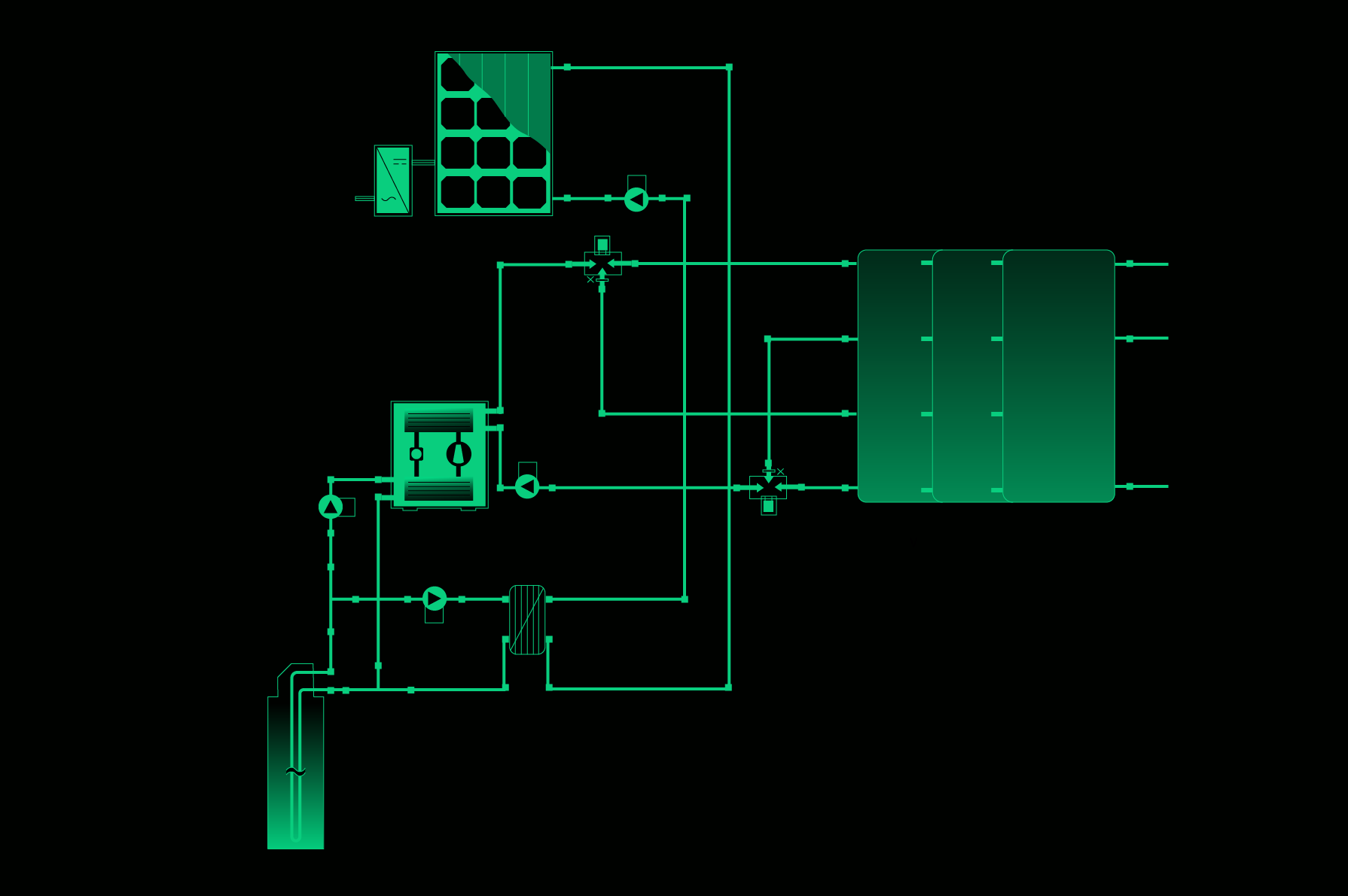
Bivalent systems combine a brine-to-water heat pump with two heat sources. These sources are most commonly PV-T collectors and an additional ground source, such as geothermal boreholes. This combination is particularly advantageous because PV-T collectors can regenerate the ground source, reducing the required drilling length. Curious about the risk factors to consider with such a system and how you can save on drilling length? Then read this article.
You can find the optimum configuration for your project by comparing different PVT systems. Benefit from our extensive database with over 5,000 heat pumps and 70 PVT collectors from well-known manufacturers.
FAQ
Can I determine the optimum number of PVT collectors using Polysun?
Yes, with Polysun you can simulate all the components of your heating and/or cooling system, such as the storage tank, the heat pump, including the heat load. This allows you to determine the optimum number of PVT collectors, so that heat production is optimally matched to your heating requirements.
What is the difference between PV, PVT collectors or hybrid solar panels?
PV (Photovoltaic) system generates electricity using solar cells. PVT collectors, hybrid solar panels or photothermal panels are different terms for the same technology, which combines photovoltaics and solar thermal energy in one collector to produce both electricity and heat. Polysun allows you to compare different variants of PV and PVT systems to find the optimum solution for your project.
What applications can PVT collectors be used for?
District heating networks, commercial and industrial buildings, as well as apartment blocks and single-family homes: PVT collectors, especially in combination with a heat pump, offer a solution for a wide range of applications.
How does a PVT collector and heat pump combination work?
PVT collectors serve as an energy source for heat pumps. The generated heat, as well as ambient heat, is used to warm a heat transfer fluid. This heated fluid is then directly fed into a brine-to-water heat pump, which further increases the temperature level.
Can PVT collectors also be used for cooling when combined with a heat pump?
PVT collectors serve not only as an energy source for heat pumps in heating mode, but can also be used for cooling. In this case, the PVT collectors release heat to the environment, lowering the temperature of the brine circulating through the collectors and the heat pump. The cooled brine is fed into a brine-to-water heat pump, which generates cold for cooling.
Can PV-T be combined with ice energy storage and heat pumps?
Combining PV-T (hybrid photovoltaic-thermal solar panels) with ice energy storage means using solar panels that generate both electricity and heat, together with a thermal storage system that stores energy as ice. This setup allows for efficient heating, cooling, and electricity generation in a building.
What are the main benefits of combining PV-T and ice energy storage and heat pumps?
• Comprehensive Energy Supply: The system covers the entire demand for heating, hot water, and electricity without any fossil fuel backup.
• Year-Round comfort: In winter, the ice storage supports heating; in summer, it provides efficient cooling for pleasant indoor temperatures.
• Higher efficiency: System simulations showed a 10% increase in overall energy system efficiency (annual performance factor).
• Lower Costs: Optimized system design led to 10% lower investment costs.
Read more in one of our reference projects for commercial buildings or contact us for further information.