
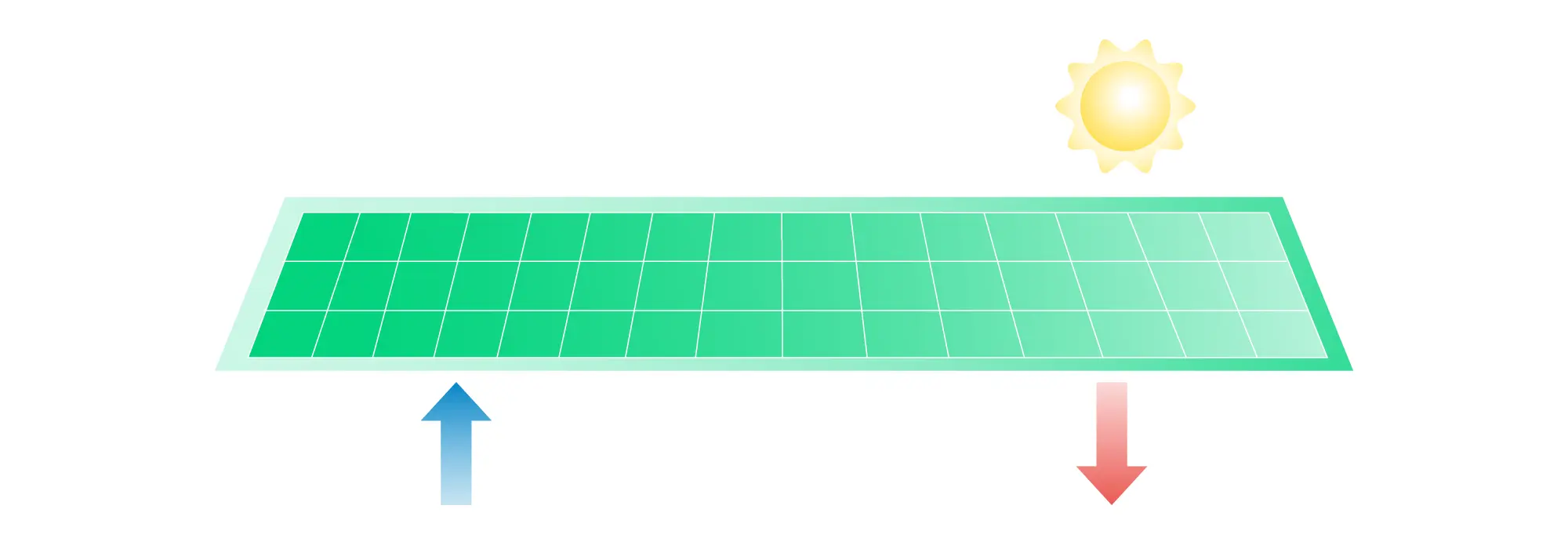
Solar Thermal Systems
The precise design and calculation of solar thermal systems are central to efficient heat supply concepts for buildings and districts. Key factors include the type and area of collectors, hydraulic integration, required flow temperature, and buffer storage sizing. In larger-scale projects—such as multi-family residences, schools, commercial and industrial facilities, as well as local and district heating networks—dynamic simulation of the entire system enables significant operating cost savings. This approach allows collector fields and storage to be tailored to site-specific demand and generation, ensures realistic assessment of solar coverage, and mitigates overheating risks. Additionally, variant-based planning reduces design risks and supports reliable decisions regarding cost-effectiveness, CO₂ reduction, and control strategies.
Where Are Solar Thermal Collectors Used?
Solar thermal systems are used in a wide range of applications and play a key role in sustainable heat supply. Typical applications include domestic hot water heating in residential and commercial buildings, heating support for single- and multi-family homes, and heat supply for swimming pools, hotels, or commercial enterprises. Particularly in local heating networks and large-scale solar thermal systems, their high potential for CO₂ savings and cost reduction is utilized. Additionally, process heat in industrial companies is increasingly provided by solar thermal systems to replace fossil energy sources.

Flat-Plate Collectors
Flat-plate collectors are equipped with a flat, selectively coated absorber that—glazed or unglazed—converts solar radiation into heat for a circulating solar fluid, making them particularly suitable for domestic hot water and heating support in solar thermal systems.
Evacuated Tube Collectors
Evacuated tube collectors use vacuum-insulated glass tubes with an absorber, significantly reducing heat losses and enabling high temperatures and yields even at low outdoor temperatures in solar thermal systems.
Parabolic Trough Collectors
Parabolic trough collectors focus solar radiation onto a receiver tube using curved mirrors, generating high temperatures for applications such as process heat or large-scale solar thermal systems.
Solar Thermal Systems for Optimal Efficiency
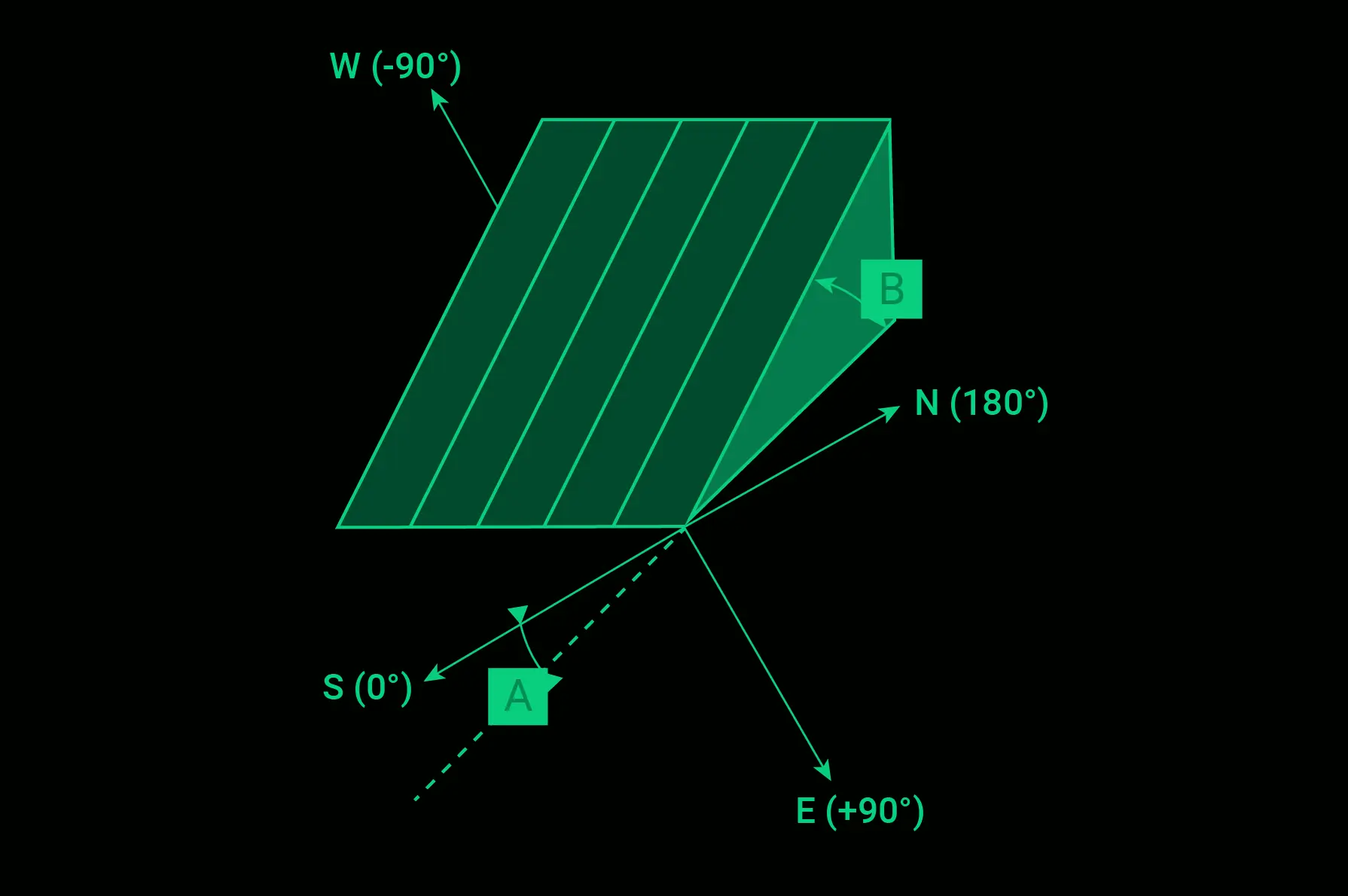
To achieve efficient, cost-effective, and durable solar thermal systems, calculating the usable solar thermal yield is crucial. Key factors such as solar radiation, orientation, collector type, and application—such as heating support or ground source loop regeneration—must be considered to plan properly sized systems. Errors in planning or design lead to energy and financial losses as well as inadequate system performance. Professional software like Polysun incorporates local climate data, varying usage profiles, and specific building characteristics, enabling realistic yield forecasts and reliable sizing for optimal solar thermal efficiency.
Why Do Customers Use Polysun for the Calculation of Solar Thermal Collectors?

Yield calculation under realistic conditions
- Location-specific weather data
- Consideration of orientation, shading, system losses

Cost savings and cost certainty
- Economic analyses and optimisation of operating costs
- Detailed economic comparisons between different design variants, taking into account investment and operating costs
- results can be used directly for subsidy applications or quotations
Dimensioning of collector field and buffer storage tank
- Precise dimensioning of collectors and buffer storage tanks based on dynamic load profiles
taking into account: flow temperatures, storage losses and usage profiles
Avoiding misinterpretations and operational problems
- With Polysun’s time-resolved simulation, temperature curves, storage load states and energy flows can be visualised in detail as early as the planning phase
- Bottlenecks, overheating or unused potential can be identified immediately and optimised in a targeted manner

Integration in hybrid energy systems
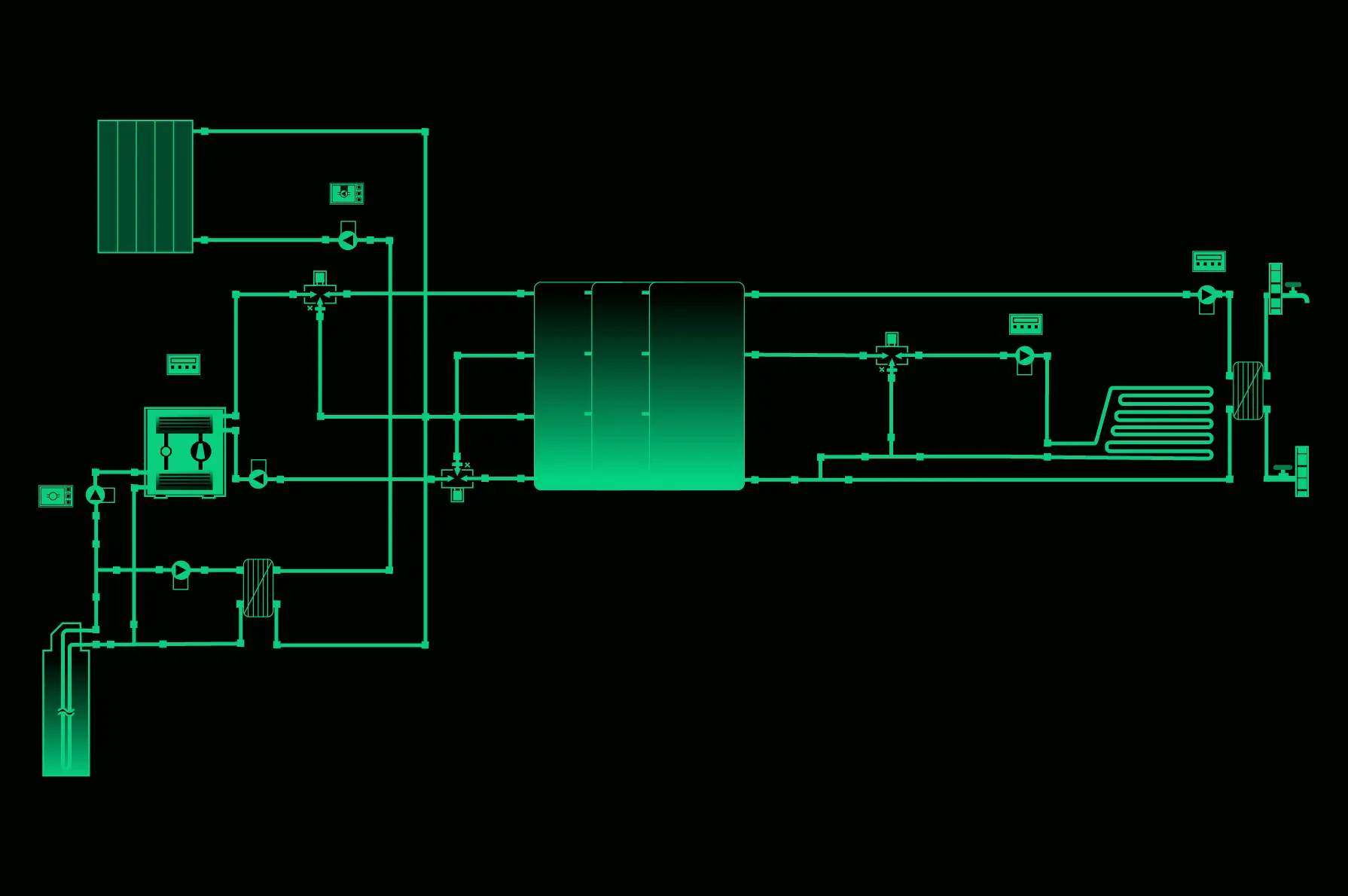
- Solar thermal energy is often combined with heat pumps, boilers, PV systems or other energy sources such as geothermal energy
- Polysun ensures the correct hydraulic integration and control of technically sophisticated systems
- It is easy to check which system combination achieves the best efficiency and lowest energy consumption

Comparing variants and reporting results
- Comparison of different planning options
- Time savings, customer-oriented presentations and reports that can be used as the basis for subsidies
Simulation of Solar Thermal Systems and Buffer Storage for Optimal Efficiency
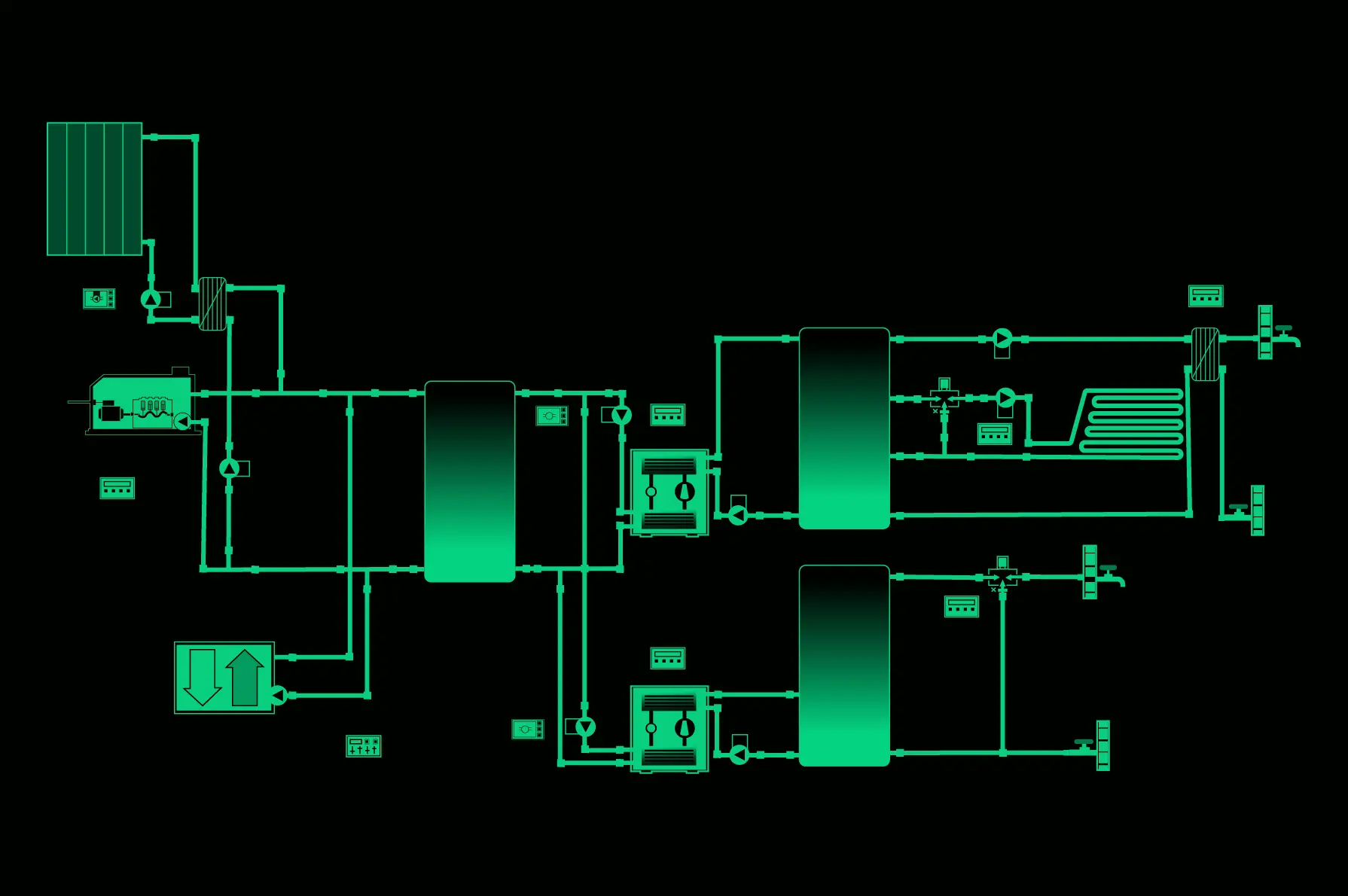
For a realistic solar thermal simulation of solar thermal systems, numerous variable factors must be considered—such as daily and seasonal fluctuations in solar radiation, the resulting solar thermal yield, the charging and discharging behavior of the buffer storage, and the integration with the overall heating system. Polysun enables detailed modeling and calculation of both individual collectors and large collector fields, offering comprehensive functions for simulating various storage solutions and variants with different flow temperatures. Additionally, Polysun allows precise modeling of hybrid energy systems—for example, combining solar thermal systems with heat pumps, gas condensing boilers, or district heating connections. This ensures an accurate representation and optimization of the interaction among all heat generators. Such solar thermal simulation provides a solid foundation for planning overheating protection, efficient summer operation, and the design of grant-eligible systems, maximizing solar thermal efficiency.
FAQ
How to select the correct number of solar thermal collectors?
The selection should be based on location-specific solar radiation, usage profile, desired flow temperature and hydraulic integration. Simulation software such as Polysun can be used to determine the precise areas of collectors, sizes of buffer tank storage and yield forecasts, and adapt these to real operating conditions.
What factors influence the yield of a solar thermal setup?
The yield from solar thermal collectors depends on the collector area, orientation, flow temperature, climate data, and storage and control strategy. The hydraulic integration and load profile of the building also have a major influence on the usable heat yield.
What is the optimum flow temperature for a solar thermal collectors?
The lower the required solar thermal flow temperature, the higher the efficiency. Systems with surface heating or low-temperature networks (35–55 °C) use solar energy particularly efficiently. Higher temperatures are required for process heat, which must be taken into account during planning.
What is the best way to assess the economic feasibility of a solar thermal installation?
The key factors are the annual energy yield, investment and operating costs, and savings in fossil fuels. Dynamic simulation enables realistic forecasts to be made regarding coverage ratio, CO₂ reduction and the amortisation period. Eligible variants can be compared directly.