
District heating design: Example Grünheide
Energy planning and district heating design: from conception to detailed planning
reich+hölscher breaks new ground in district heating design and convinces with an innovative energy concept – simulated with Polysun.
District heating design example Grünheide
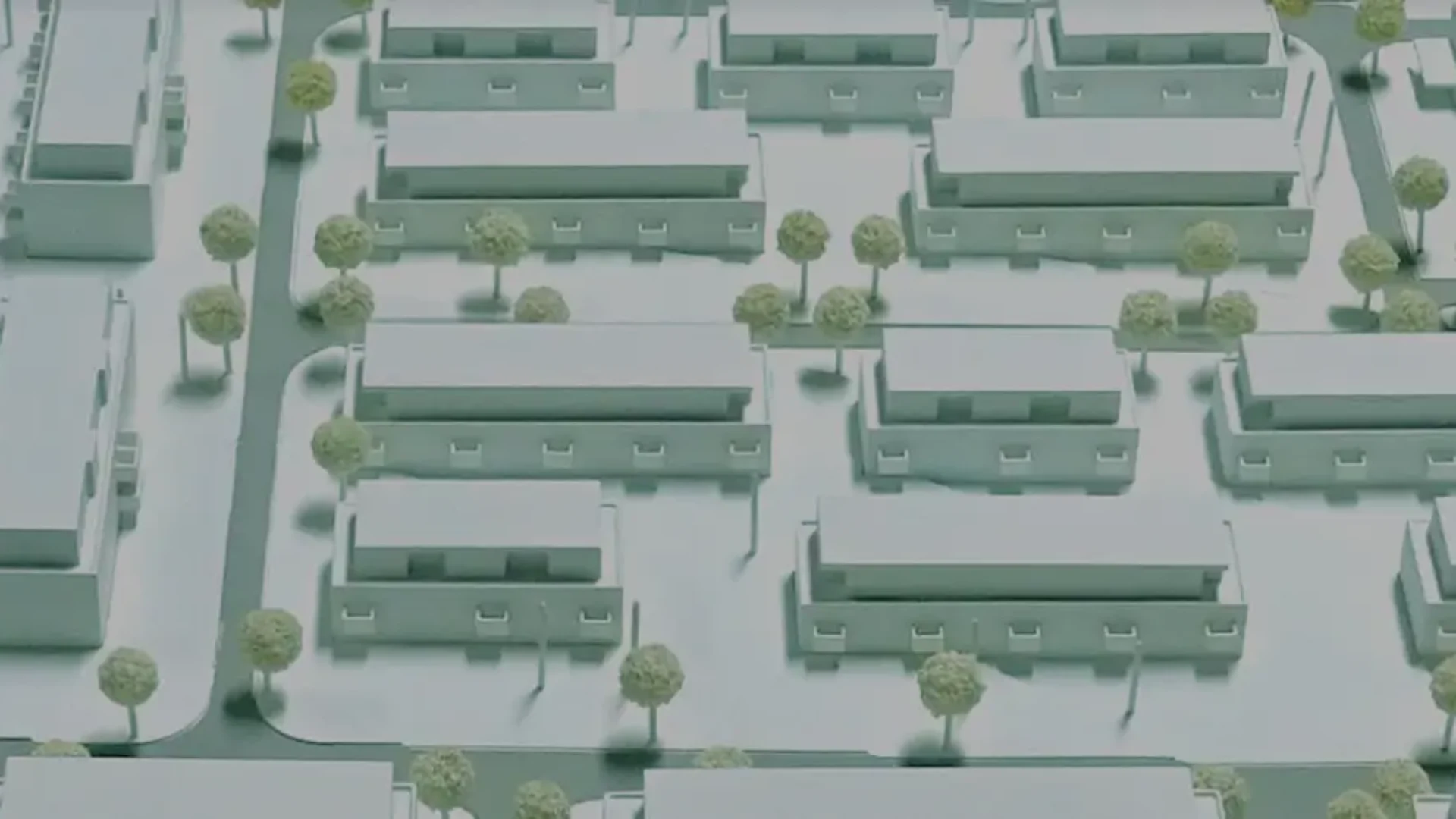
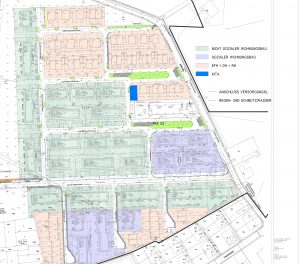
The Grünheide urban district is being built in the northwest of Bielefeld’s Mitte district in Germany. With around 600 residential units, it will be one of the largest in the city. On an area of eight hectares, the investor Amandla International GmbH & Co. KG (Unna) plans to build 400 city apartments. In a further construction phase, additional buildings with around 100 residential units may be built. Special properties for care facilities or student apartments are also being considered. Another important part of the concept is a daycare center.
Low CO2 balance, comparison of district heating connection and local district heating network variants
In the competitive bidding process for the energy concept, the Bielefeld engineering office reich + hölscher came out on top. It was important to the investor to realize a future-oriented solution with the lowest possible CO2 balance, which at the same time efficiently and economically utilizes the possibilities of a centralized energy generation. reich+hölscher examined various options under this prerequisite: The reference scenario in the district heating design was the heat supply via the district heating connection of the Bielefeld municipal utility and the operation of the local heating grid or local district heating network with a flow temperature of 75 degrees. Alternatively, different options for the operation of a “cold” local heating grid with a flow temperature of 45 degrees and the integration of air-water heat pumps were investigated.
Local heating network: energy is generated in the district, low transportation losses
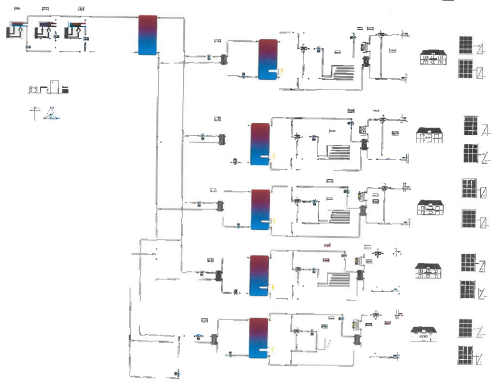
For a meaningful comparison of options, reich+hölscher relied on the Polysun simulation software and the cooperation with Vela Solaris from the very beginning. All the options investigated could thus be simulated and compared in terms of security of supply, energy efficiency and profitability. It became clear which option was the most convincing: In the selected option, electricity from the sun and heat from the air is used for heating the apartments based on a flow temperature of 45 degrees. This is perfectly sufficient for the heating systems in the nearly 400 apartments. A second part of the electricity is used to heat hot water for bathrooms and kitchens in each building. The houses are connected by a local district heating and cooling systems: to several water storage tanks in the houses, which hold a total of 60,000 liters. A third part of the electricity generated goes into lighting, comfort and technology for the residents. The major advantages of this solution are that the energy is generated directly in the district: short pipe runs and low supply temperatures minimize transport losses.
Reduction in operating costs and subsidies local heating networks 4.0
In the further optimization of the chosen options, Polysun’s simulation results provided valuable insights. For example, it was possible to reduce the installled capacity of the heat pumps by 40% and thus significantly decrease the cost heat pump system. In addition, individual questions could be answered specifically by simulation. One question concerned the choice of pipe insulation, taking into account economic efficiency. The energy losses of different pipe systems were simulated and compared with the investment costs. Another question concerned the necessary expansion of the installed capacity of the heat pumps when additional construction fields are added. Here, it was also possible to analyze the load scenarios simulatively over the time axis and to optimally dimension the correspondingly necessary expansion of the heat pumps’ installed capacity. The energy system project already set up in Polysun in the competition phase was used throughout and enriched with input data, from the design planning to the implementation planning to the BAFA application within the framework of the Heat Networks 4.0 funding (Förderung Wärmenetze 4.0).
An important aspect concerns the future planned use of the Polysun simulation software: BAFA stipulates monitoring of the energy system over eleven years. reich+hölscher therefore plans to compare the simulated results from Polysun with the measured actual values to ensure quality assurance during operation.
What is particularly appreciated about the cooperation with Vela Solaris is the competence in setting up the simulation projects in Polysun. With the support of the Vela Solaris simulation experts, the setup and further optimization of the energy projects succeeded reliably and in a time-saving manner.

Thomas Leidecker
Leiter Projektentwicklung, reich+hölscher ingenieurbüro
“For the new urban district Grünheide, the objective was to rely on future-oriented solutions for the energy supply that are also economical. The Polysun simulation software enables a meaningful comparison of options and an economical dimensioning of the energy generation components. The simulation results provide added value right through to quality assurance in operation.”
Summary
Principal
Amandla International GmbH & Co. KG
Engineering company
reich+hölscher ingenieurbüro
Energy system components
Air-water-heatpumps, buffer tank, warm water storage tank, PV
Services of Vela Solaris
Licensing of simulation software Polysun Designer and support during the project in the simulation of project options.
Result
Awarded the contract for planning the energy concept and district heating design for reich+hölscher as part of a competitive tendering process. Successful completion of design and implementation planning. Significant reduction of investment and operating costs through simulative optimization of the dimensioning of the generator output and the pipe insulation. Non-binding prospect of funding by BAFA.
Galerie

Get in touch