
Buffer Tank Sizing
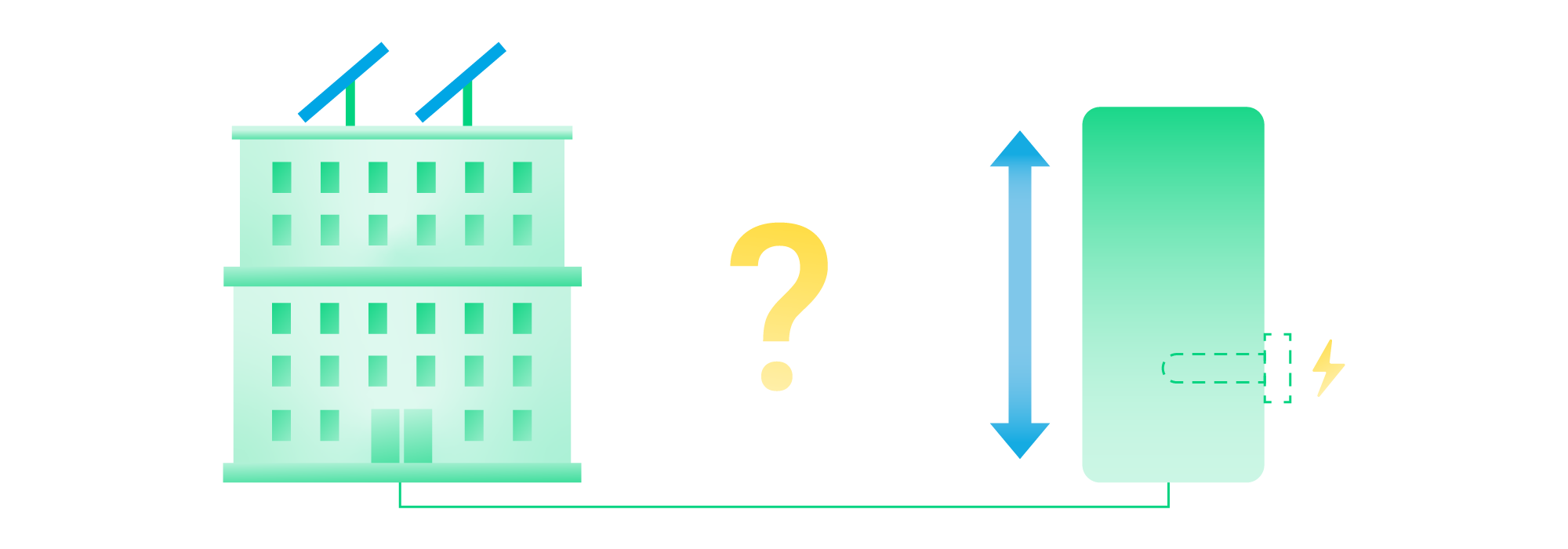
Buffer tank sizing is a critical component in the efficient design of energy and heat pump systems. The number of buffer tanks, their configuration, hydraulic integration, and precise dimensioning all have a direct impact on system performance and operational efficiency. For large-scale applications—such as multi-residential buildings, schools, commercial and industrial facilities, and district heating networks—system simulation can reduce operating costs by up to 40%. Simulation allows engineers to tailor buffer vessels precisely to the actual heating demand and generation. This helps prevent planning risks such as frequent start/stop cycling of heat pumps.
What Types of Buffer Tanks Are There?
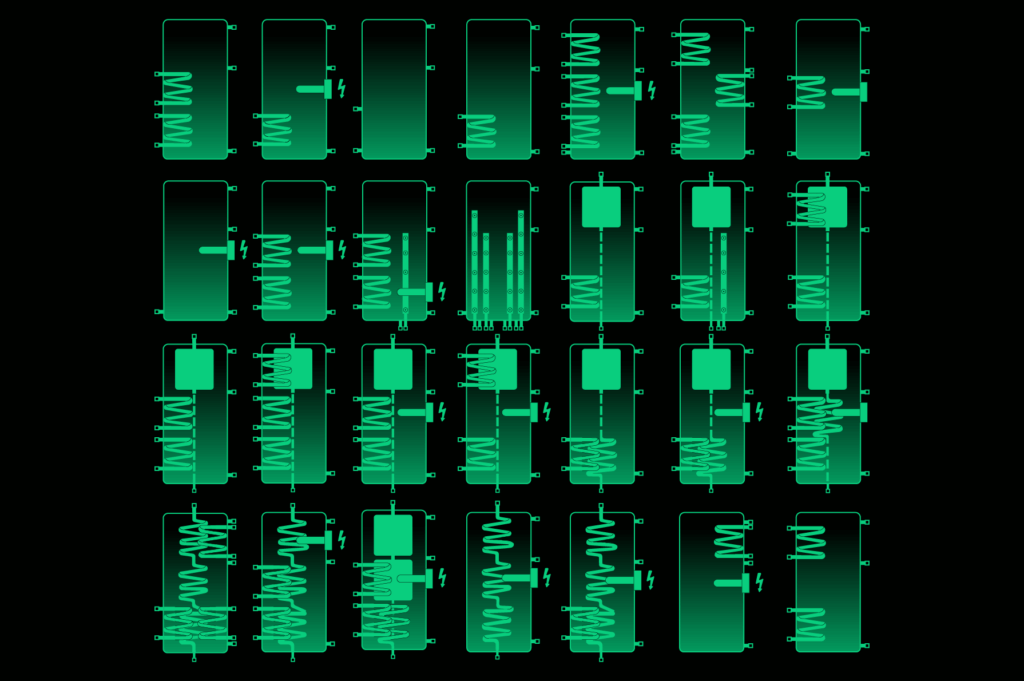
Buffer tanks are critical components of hybrid thermal energy systems. They facilitate the integration of multiple heat sources, such as heat pumps, boilers, or district heating, with end-use systems like hydronic heating and cooling, domestic hot water, and industrial process heating. By providing temporary storage of thermal energy, buffer tanks ensure stable and efficient operation of heating and cooling systems. They are used in multi-family homes, hospitals, schools, district heating networks, industrial facilities, and other applications.
The design, configuration, and sizing of a buffer vessel affects the operating times and efficiency of the entire heat pump system. Therefore, selecting the correct buffer tank configuration is essential for achieving optimal system performance.

Central Large-Scale Buffer Tanks:
High-capacity buffer vessels designed to store and supply thermal energy centrally for multiple buildings or entire districts. These buffer tanks play a key role in district heating or large-scale applications by balancing loads across various consumers.

Seasonal Storage Tanks (Seasonal Buffer Vessels):
These large-scale thermal storage tanks are designed for long-term energy storage—typically several months—by absorbing excess heat or cold and supplying it later to meet demand. They play a vital role in balancing seasonal energy use. For example, by storing solar surplus in summer for heating demand in winter.

Standard Buffer Tanks
Designed to store thermal energy from sources such as heat pumps, boilers and combined heat and power (CHP) systems, and to provide this energy to the heating system on demand.

Domestic Hot Water Tanks (DHWT):
Hot water storage vessels are dedicated to storing potable hot water for direct consumption. They are hydraulically separated from the central heating circuit to maintain water quality.

Combination Tanks (Combi Tanks / Hygiene Buffer Vessels):
Combi buffer vessels, also called hygiene tanks, integrate both buffer tank and domestic hot water storage functions. Potable water is hygienically heated on demand via an internal heat exchanger, preventing stagnation and bacterial growth.

Chilled Water Buffer Tanks
Store cold water from a chiller or heat pump, supplying it on demand to a cooling distribution system, such as floor cooling.
Where Are Buffer Tanks Used?
Without a buffer tank, the energy source would need to be switched on each time heat or cooling is required. However, a buffer vessel allows the energy source (e.g. a heat pump) to be activated only when the stored thermal energy is depleted. This optimises switch-on and switch-off times, thereby extending the lifespan of heating and cooling equipment. Furthermore, the buffer decouples heating/cooling load from the energy source, helping to cover demand peaks. Thus, selecting the correct buffer tank can lead to a reduction of the required heat pump size.
Optimising these aspects, especially in larger commercial systems, is best achieved by simulating the system using a buffer tank sizing calculator such as Polysun. Practical applications for buffer tanks include:
- Residential Buildings: In both single- and multi-residential buildings, buffer tanks ensure consistent heating/cooling delivery and enhance overall system efficiency.
- Public Buildings: In schools, hospitals, and sports venues, buffer tanks enable flexible, demand-led heating and support efficient energy source run times.
- Commercial and Industrial : Buffer tanks ensure the demand for process heating and cooling is met. They also enable the use of waste heat from industrial operations.
- District Heating/Cooling Networks: In district heating systems, central buffer storage balances peak loads. This ensures a stable energy supply.
- Renewable Energy Systems: Buffer tanks in solar thermal systems store surplus heat for use when needed. This makes them ideal for intermittent renewable energy generation..
Why should customers use Polysun for Buffer Tank Sizing?

Accurately Calculate Seasonal Performance SCOP/Seasonal COP
- Determine the seasonal performance (Seasonal COP) factor of the entire energy system, e.g. a heat pump cascade system with a buffer tank integration.
- Provides a solid and reliable foundation for system design, performance guarantees and subsidy applications.

Cost Savings and Cost Certainty
- Life Cycle Cost Analysis and Optimisation
- Detailed life cycle cost comparisons for different sizing options—including investment, operational costs, and maintenance.
- Cost Security for Energy Contracting and Collective Self-Consumption:
Reliable economic projections and sensitivity analyses give certainty for performance-based contracting and shared energy schemes (e.g. collective self-consumption arrangements).

Design and Planning Security
- Precise Buffer Vessel Sizing Using Dynamic Load Profiles
- Exact dimensioning of buffer tanks based on real, dynamic project load profiles, accounting for all necessary components (heat pumps, CHP units, and auxiliary sources).

Prevention of Design Errors and Operational Issues
- Identify Frequent System Cycling, Avoid Comfort Deficiencies and Energy Losses: By detailed simulation, Polysun supports early detection of common design faults—such as excessive start/stop cycling of generators—which can degrade efficiency and comfort, and shorten plant life.
- Extend the Lifespan of Heating and Cooling Equipment: Optimised design leads to increased efficiency and longer lifespan for the entire energy system.

Optimisation Under Real-World Operating Conditions
- Optimal Hydraulic Integration
- Determine the Best Hydraulic Configuration for Buffer Tank Integration: Analysing whether parallel or series connection is most effective for your scheme.
- High Accuracy of Simulation Compared to Real-Life Performance: The close match between simulated results and actual system performance reduces discrepancies at commissioning and handover.
Flexibility for All Buffer Tank Types and Applications
- Wide Range of Buffer Vessel Solutions: Model and size a comprehensive range of buffer vessel types—from domestic to industrial scale—tailoring them to the specific requirements of your building or system.
- Project-Specific Adaptation: Polysun’s flexibility enables you to fine-tune the buffer tank sizing and system layout for bespoke project conditions.
In which applications are Buffer Tanks used?
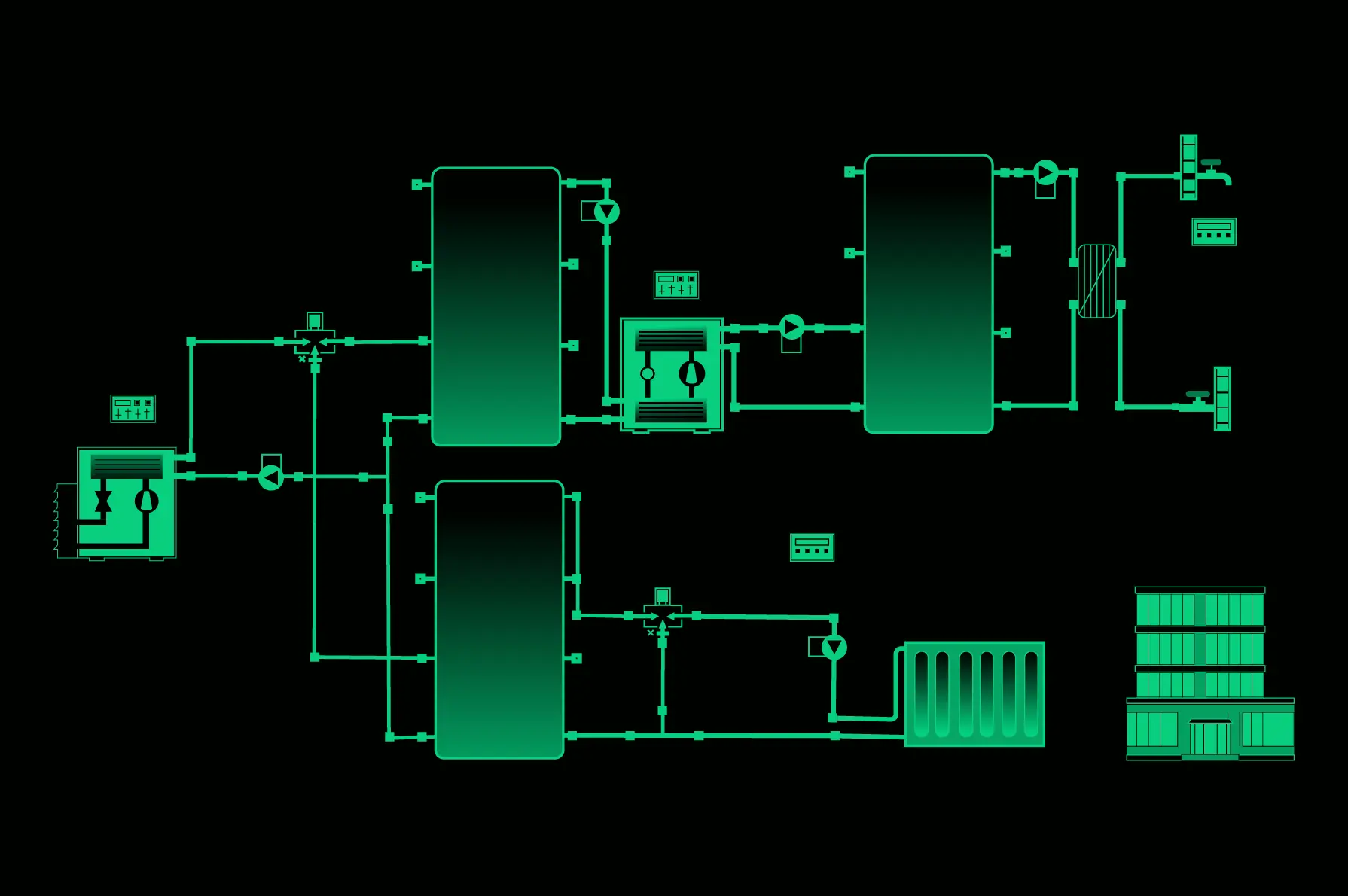
In most energy systems, at least one buffer tank is required; in complex installations, several may be installed in parallel or series. Parallel tank configurations maximise stored energy within spatial constraints. They also allow standard tanks to be used for larger capacities. Buffer tanks may also be arranged in series to accommodate different temperature levels within a single system.
For optimal buffer tank sizing and hydraulic configuration—especially with multiple tanks—careful hydraulic planning is essential. Polysun’s simulation environment offers detailed modelling tools to visualise and optimise these arrangements. This helps in minimising planning risk and maximising performance.
Decoupling Generation and Demand with Buffer Tank Sizing
- Multi-Residential Building with Heat Pump and Buffer Tank: In a multi-unit dwelling, the heat pump operates efficiently—charging the buffer tank to supply both space heating and domestic hot water as required. Proper buffer tank sizing ensures stable temperatures and reduces compressor cycling.
- Hotel Application with Biomass CHP, Solar Thermal, and Buffer Storage: Biomass CHP runs at a constant load while solar thermal provides additional heat input when available. The buffer vessel enables flexible integration and optimises system efficiency.
Integration of Solar Thermal Systems
- Apartment Block with Solar Thermal, Heat Pump, and Buffer Storage: Solar thermal charges the buffer tank during daylight hours; the heat pump supplements in the evening. Using a buffer tank sizing calculator ensures optimal storage capacity.
- Sports Hall with Solar Thermal, Gas Backup, and Buffer Tank: Solar thermal meets base hot water demand (e.g. for showers), with gas boilers covering peak loads. Buffer vessel sizing balances supply and demand for maximum efficiency.
Domestic Hot Water Production
- Nursery with Gas Condensing Boiler, Solar Thermal, and Buffer Tank: Solar energy is prioritised for hot water production, with gas backup as needed. Accurate buffer tank sizing maximises solar utilisation and minimises fossil fuel use.
- Pool Facility with Buffer Tank and Fresh Water Production for Showers: Solar thermal provides base load heating, while the buffer tank stores and distributes heat for pool and shower water. Gas supplementation covers high-demand periods.

Heat Pump Cascade with Buffer Tank
- Office Building with Twin Air-to-Water Heat Pumps and Two Buffer Tanks: The first heat pump charges a low-temperature buffer, while the second supplies a high-temperature storage vessel. Buffer vessel sizing dictates system flexibility and run-time optimisation.
- Commercial Site with Staged Heat Pump Cascade and Buffer Tank: Under part load, only one heat pump is operated; others remain off, reducing energy consumption and wear.
District Heating Integration
- Village District Network with Solar Thermal, Heat Pump, and Central Buffer Tank (50m³+): Solar energy is stored in the central buffer during the day and distributed in the evening. Correct buffer tank sizing is vital for peak-shaving and year-round balance.
- School with District Heating Connection, Solar Thermal, and Buffer Tank: Buffer storage reduces peak loads, lowers contracted connection capacity (and costs), and optimises overall energy management.

Integration of Multiple Heat Sources
- Hospital with Solar Thermal, Gas Boiler, Heat Pump, and Buffer Storage: The buffer tank is charged with the available source based on a prioritised control strategy. Such flexible buffer tank sizing accommodates dynamic demand and multiple generators.
- District Heating Network with Heat Pumps, Solar Thermal, and Buffer Tank: The buffer vessel absorbs surplus heat, allowing for efficient network design and operation. Using a buffer tank sizing calculator helps to maximise renewable share and operational cost savings.
Buffer Tank Sizing Calculator: Critical Success Factors
Effective buffer tank sizing requires a thorough understanding of both the energy generation and the load profile. End-use systems (for example, heating circuits, process heat, hot water) determine required temperatures and draw volumes. Meanwhile, the energy sources and control strategy set supply temperatures and flow rates. For retrofit and space-limited projects, storage volume may be restricted. Careful system control becomes essential to maintain comfort and to avoid inefficient operation of energy sources (eg. heat pump). Simulation tools such as Polysun are invaluable for this iterative optimisation and are a great buffer tank sizing calculator.
FAQ
Can different types of buffer tanks be sized in Polysun?
Yes. Polysun allows realistic modelling of various buffer tank types—from classic domestic hot water tanks and combination tanks to large storage tanks for complex supply concepts.
How is a buffer tank planned in a system with solar thermal, pellet boiler, and domestic hot water station in a multi-family dwelling?
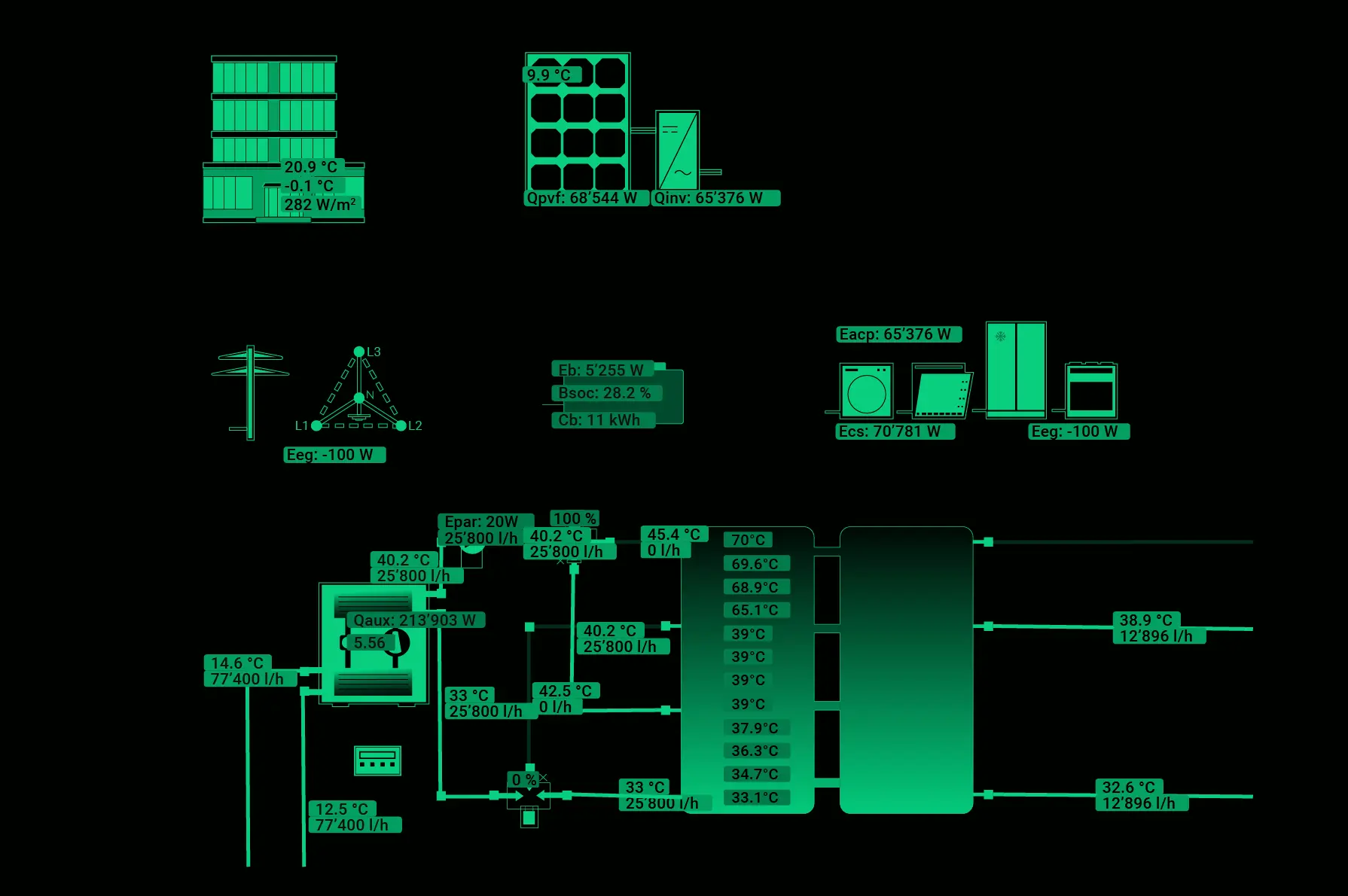
Polysun can accurately size a multi-family dwelling’s buffer tank based on heating and domestic hot water demand. It acts as the interface between generators (solar thermal, pellet boiler) and consumers (heating, domestic hot water). Various hydraulic configurations, storage volumes, and operating strategies can be simulated and compared to maximise efficiency and optimise solar coverage.
How can a buffer tank be integrated into a district heating or cold network?
Polysun enables the sizing and integration of buffer tanks in district or cold networks through simulation of central or decentralised storage concepts. For example, a central buffer tank (e.g., 50 m³+) for a district heating network with solar thermal and heat pumps can be modelled and compared with decentralised solutions. Different hydraulic layouts can be simulated to balance peak loads, stabilise supply, and minimise operating costs.
How is a buffer tank incorporated into a system with CHP, gas peak load boiler, and solar thermal?
In Polysun, the buffer tank is modelled as a central interface, charged by CHP, gas peak load boilers, and solar thermal. Control can prioritise solar thermal to maximise energy efficiency. Simulations allow determination of optimal tank size, hydraulic integration, and operating strategy, providing heat on demand, minimising operating costs, and ensuring optimal generator runtime.