

Geothermal energy heating: How to determine the right loop length
Geothermal energy heating systems rely on ground-loop fields that are exposed to both seasonal and long-term thermal loads. Without proper regeneration, the ground can gradually cool down, which in turn leads to performance losses. This makes regeneration especially important for systems in multi-family homes and office buildings, where thermal demand is high and continuous.
To ensure efficient and reliable operation, optimal planning requires precise simulations that take into account site-specific conditions, soil characteristics, and usage profiles. With Polysun, you can evaluate different scenarios and design durable, high-performing geothermal solutions.
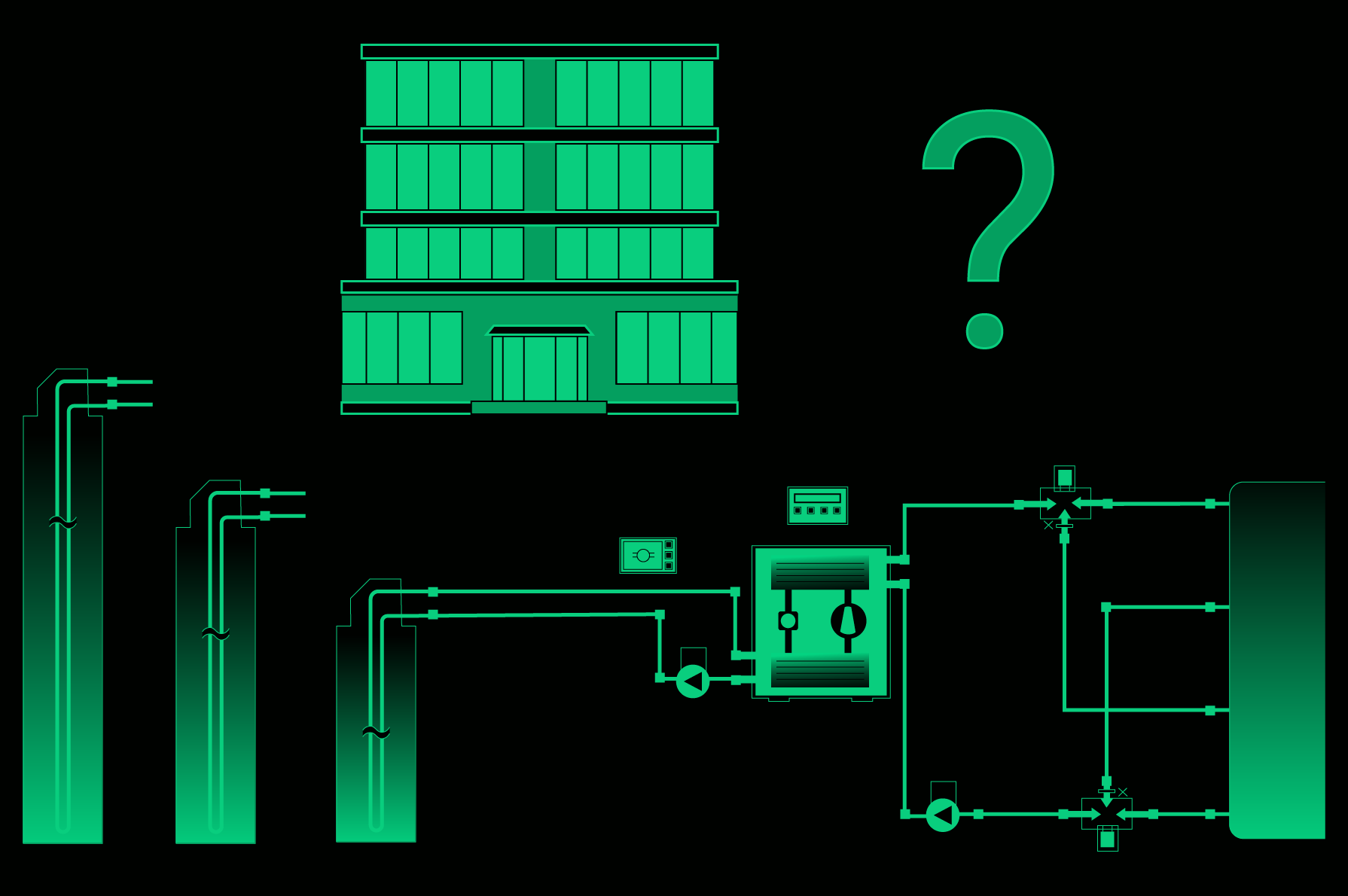
What is the optimum loop length?
The optimal borehole length for a geothermal energy heating system is crucial for both long-term performance and economic viability. It’s important to meet technical requirements while also adapting to regional conditions and project-specific constraints.
With Polysun, you can accurately simulate ground-loop fields and tailor the design to each project. The software takes into account soil properties, building loads, and climate data, as well as different regeneration strategies. This allows you to compare design variants and select the most efficient and cost-effective solution for your system.
Free cooling with a ground-source loop
- Efficient Building Cooling: Utilize the low temperature level of the ground for natural and energy-efficient cooling in summer.
- No Additional Power Consumption: Direct heat exchange eliminates the energy demand of conventional air conditioning systems.
- System-Friendly Cooling: Avoid high peak loads on heat pumps and extend their lifespan.
- Optimal Integration into the Overall System: Combine free cooling with regenerative heat strategies to maintain long-term thermal stability of the ground.

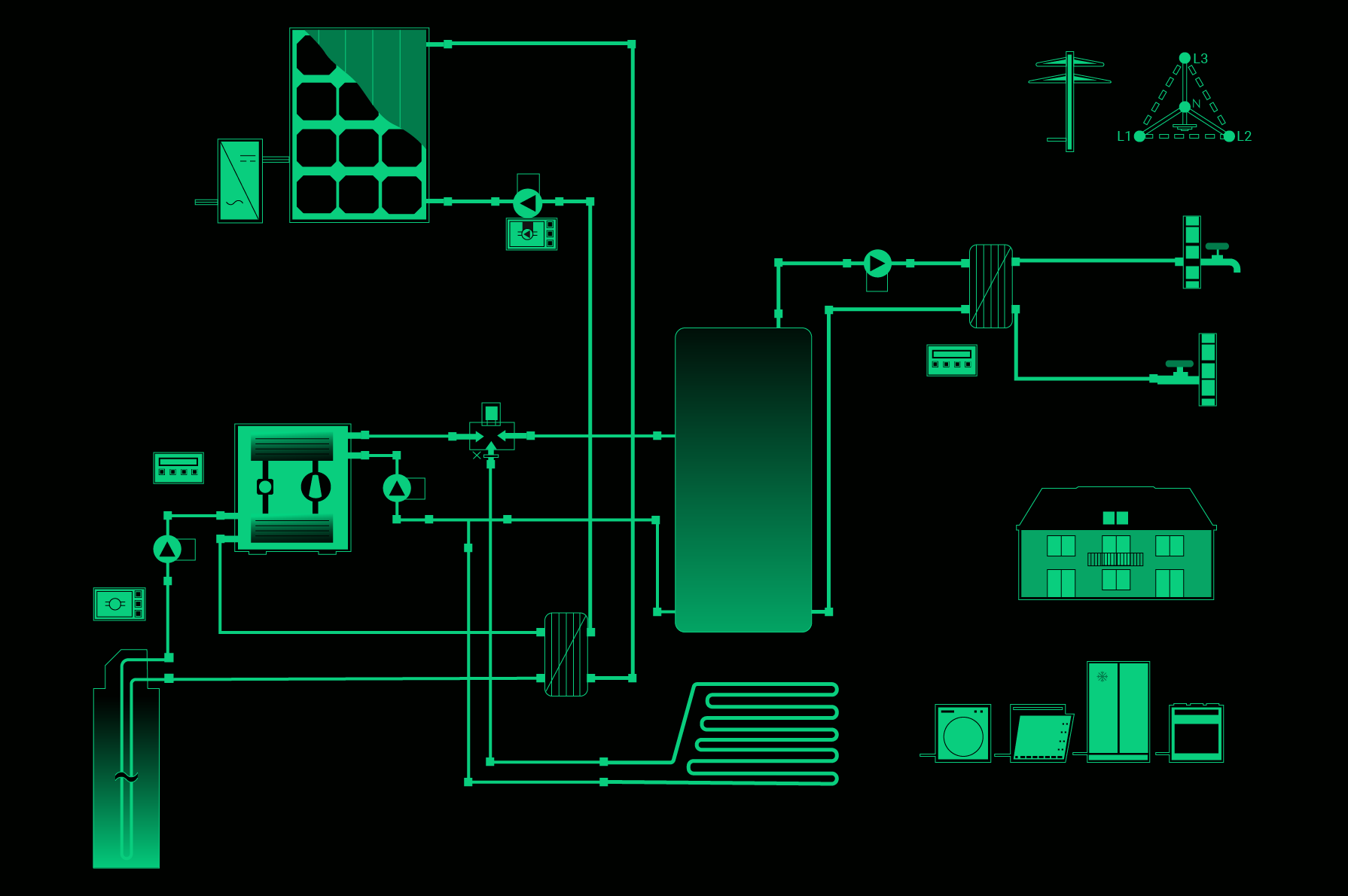
Regenerating ground-source heat exchangers with solar thermal energy
- Regeneration through solar thermal energy: Use excess solar heat to heat the ground in a targeted manner and avoid long-term cooling.
- Optimum source temperatures: Stabilize the temperature of the geothermal probe and improve the efficiency of the heat pump for years to come.
- Reduced drilling effort: Thermal regeneration reduces the number of meters of probe required – saving investment costs.
- Year-round use of renewable energy: Integrate solar thermal energy as a heat source in summer and benefit from constant conditions in winter.
FAQ
Can I calculate how many meters of ground-source loop can be saved through regeneration with Polysun?
Yes, Polysun allows you to directly compare variants with and without regeneration. This way, you can see how regeneration – for example via solar thermal systems, free cooling, or dry coolers – affects the required borehole length. The difference shows you how many meters can be saved through thermal regeneration of the ground-source system.
Can I determine the size of the ground-source loop field with Polysun?
Yes, Polysun enables the design and dimensioning of entire ground-source loop fields. You can define multiple loops with individual depths, model distribution networks, and account for thermal interaction. This allows you to realistically simulate and optimize the entire field – including an energy analysis over multiple years.
Can Polysun model ground-source loops as seasonal storage?
Yes, Polysun simulates the thermal dynamics of the ground over several years. This allows you to use loops as seasonal storage – for example, to store heat in summer and retrieve it in winter. The simulation takes into account both the heat input and the natural regeneration of the ground.
Does Polysun show me the optimal ground-source loop length?
Polysun shows how different ground-source loop lengths affect system performance and operating temperatures. You can optimize the loop length by comparing different variants. This helps you determine the economically and technically optimal length for your project.
Can I check with Polysun whether my ground-source loop field fully regenerates?
Yes, Polysun provides detailed insights into how much heat is extracted from and added to the ground each year – for example through summer regeneration. This allows you to assess whether the ground-source loop field remains in long-term thermal balance or whether a gradual cooling is likely to occur.
How can I find out with Polysun at which temperature the ground stabilizes in the long term – with or without partial regeneration?
In Polysun, ground-source loops can be simulated as part of the overall system – including heat pumps and storage – over several years or even decades. This allows you to realistically determine the stabilized ground temperature.