Press Releases
Phase Change Material (PCM): Successful Simulation of Latent Thermal Storage with Polysun
What Are Phase Change Materials (PCM) and Why Are They Important?
Phase Change Materials (PCM) are innovative substances that absorb and release thermal energy during the process of melting and solidifying. This unique property makes them highly effective for latent thermal storage, enabling the efficient management of heating and cooling in buildings and energy systems. By integrating PCM into thermal storage solutions, it is possible to store large amounts of energy in a compact form, enhancing both energy efficiency and flexibility in renewable energy applications.
The Challenge: Simulating PCM-Based Latent Thermal Storage
Accurately simulating the behaviour of PCM-based latent thermal storage systems is complex. It requires precise modelling of material properties, heat transfer, and the dynamic interactions within real-world energy systems. Until recently, such simulations were either limited in scope or required highly specialised tools.
Advanced Thesis at HSLU: Pioneering PCM Simulation in Polysun
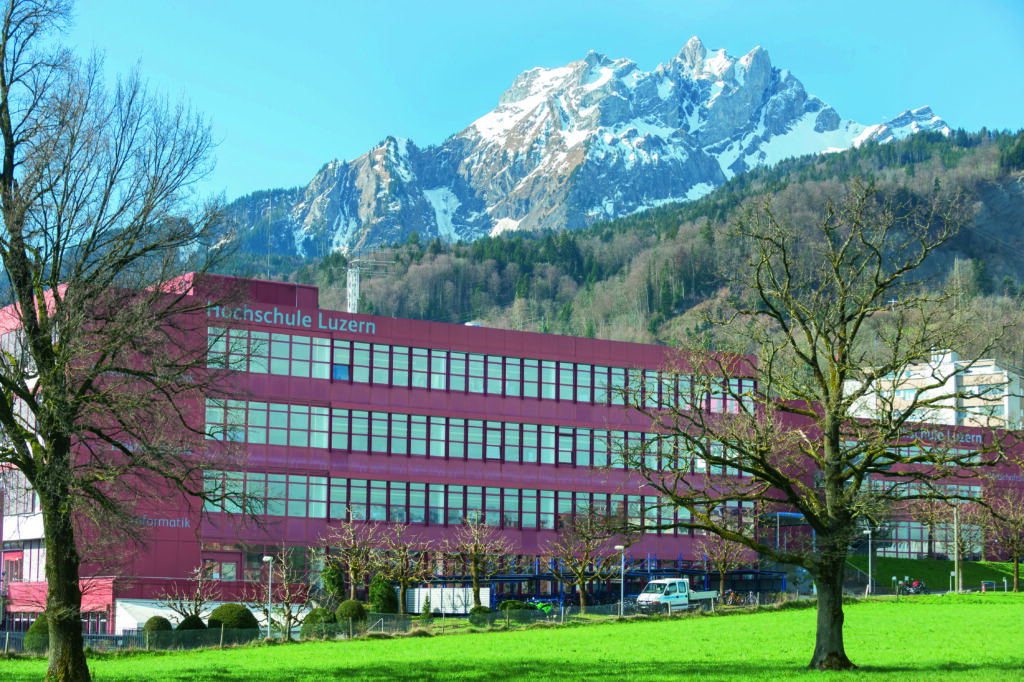
A recent advanced thesis at the Lucerne University of Applied Sciences and Arts (HSLU) tackled this challenge head-on. Markus Lacher focused on simulating latent thermal storage systems using PCM capsules within the Polysun software by Vela Solaris.
The project comprised several key steps:
- Detailed System Analysis: The latent thermal storage system was thoroughly analysed to identify all relevant influencing parameters.
- Parameter Analysis: Fluid properties in Polysun were examined to understand how storage temperatures and capacities are calculated.
- Programming and Testing: Three different PCMs were programmed and experimentally simulated.
- Experimental Validation: An experimental storage system was modelled in Polysun and validated against real measurements.
- Real-World Application: The simulation was extended to a single-family house energy system to test practical performance.
Key Findings from the Thesis
The results were highly promising. The simulated storage capacity of the experimental tank (about 7.97 kWh) closely matched both the measured capacity (7.9 kWh) and the theoretically calculated value (8.1 kWh). This high level of accuracy demonstrates that Polysun can reliably simulate both PCM and latent thermal storage systems using standard components.
“The simulations showed that both PCM and the latent thermal storage in Polysun can be simulated with the given components. The simulated capacity of the experimental storage tank of about 7.97 kWh corresponds quite closely to the measured capacity of 7.9 kWh or the temperature calculated 8.1 kWh.”
Why This Matters for Energy System Simulation
The successful validation of PCM simulation in Polysun marks a significant step forward for energy system designers and engineers.
With this capability, users can:
- Reliably model and optimise PCM-based thermal storage for buildings and energy networks.
- Improve energy efficiency and system flexibility.
- Confidently plan for the integration of renewable energy sources and advanced storage technologies.
Polysun’s multi-practice simulation environment supports a wide range of applications, from single-family homes to entire districts, ensuring robust results for functionality, efficiency, and profitability.
Conclusion: PCM Simulation with Polysun – Ready for Real-World Applications
The integration of phase change materials into thermal storage systems represents a leap forward in energy storage technology. Thanks to the successful simulation and validation work conducted at HSLU, Polysun users can now leverage this powerful feature to design and optimise advanced energy systems with confidence.
Interested in learning more about simulating PCM and latent thermal storage with Polysun? Contact Vela Solaris for further information and support.
Find here the complete thesis (in german): link
With the Polysun software from Vela Solaris you can rely on a multi-practice simulation of your energy system with reliable results in terms of functionality, energy efficiency and profitability – from single-family homes to districts, worldwide and for all market-standard technologies.