
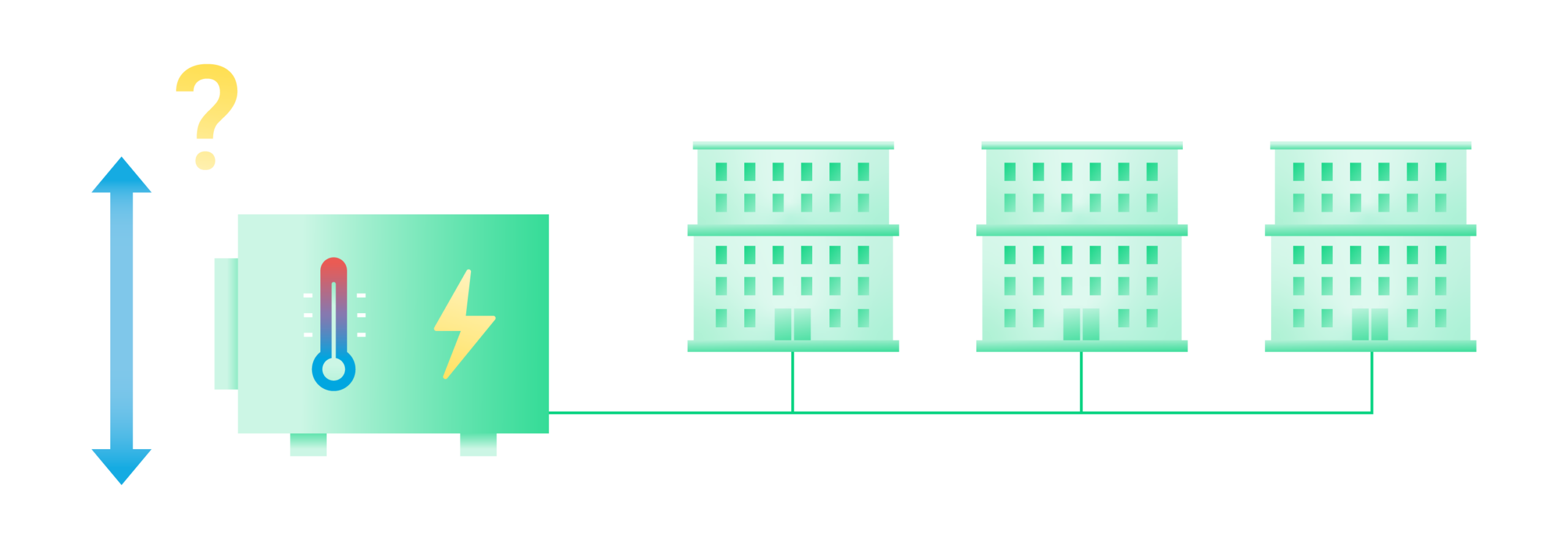
CHP system design: simulate combined heat and power systems dynamically
A combined heat and power (CHP) unit – also called cogeneration – produces electricity and heat from the same fuel. But how large should it be to run long and profitably? Should it follow heat demand, power demand or electricity prices? And how much should a heat pump or peak-load boiler cover?
With Polysun, you can compare different supply concepts and validate the sizing of the CHP unit before any equipment is ordered. The software shows which concept reliably covers the heat demand, avoids oversizing and achieves the lowest life-cycle costs.
Why validate CHP systems before construction?
CHP sizing is often based on load duration curves, full-load-hour rules of thumb and safety margins. Buffer storage, cycling, other heat generators and volatile electricity prices are left out. The result: units that are oversized, cycle too often or generate power exactly when it is worth least.
With Polysun, different system variants can be validated using real climate data, load profiles and electricity prices. The software calculates operating hours, starts, coverage shares and costs for every point in the year. This enables the most suitable concept to be identified early on and allows recommendations to clients and investors to be backed up with simulation results.

Comparing variants in hours instead of weeks
Heat-led, power-led or price-driven, with or without a heat pump: all concepts are compared under the same boundary conditions.

Avoid oversizing
Assumptions are replaced by system-based validation. The simulation shows which CHP output and storage volume actually meet the demand.

Electricity and heat in one simulation
Polysun simulates power and heat generation together and shows how much electricity is used on site, exported or consumed by the heat pump.
What typical CHP applications does Polysun cover?
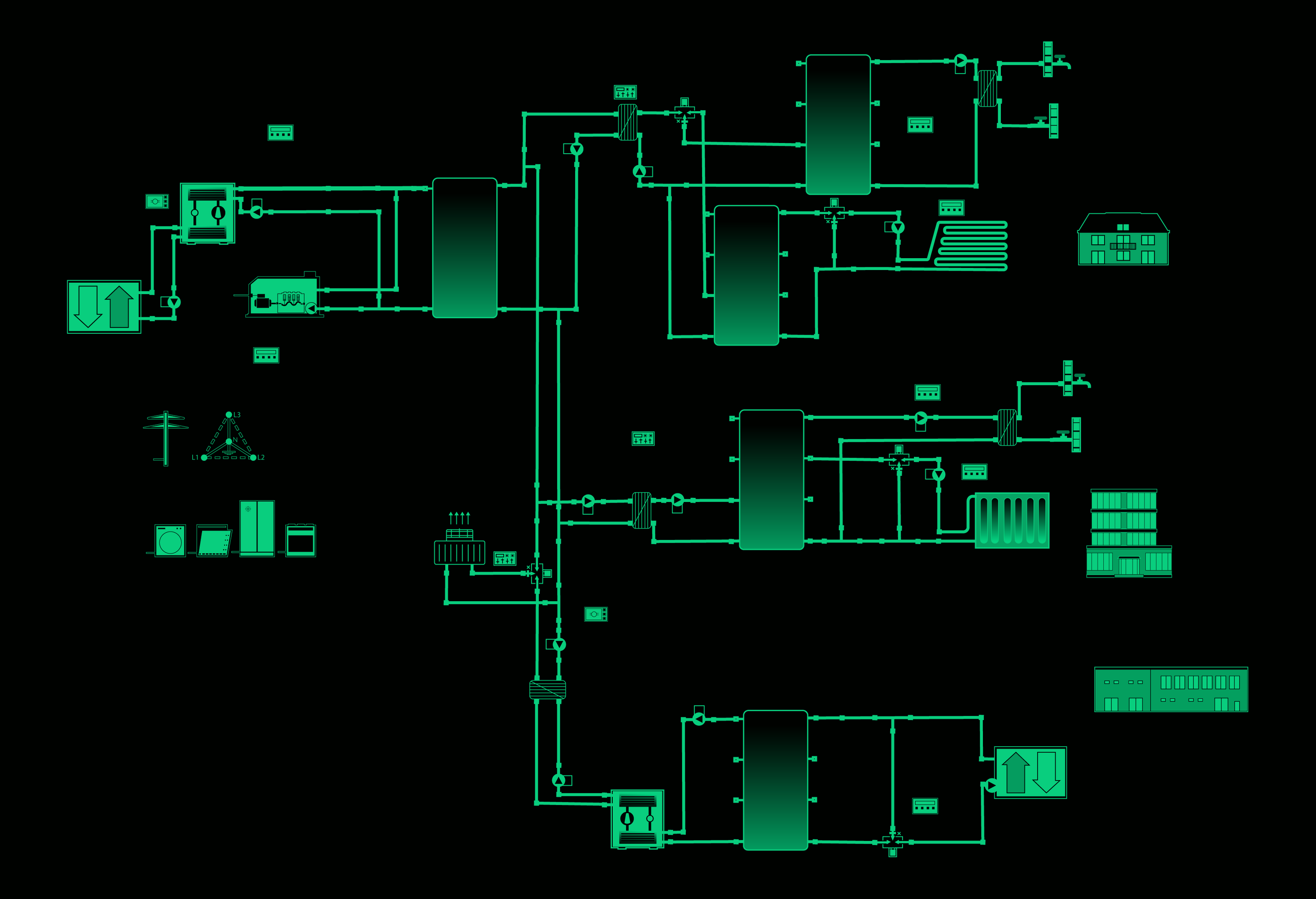
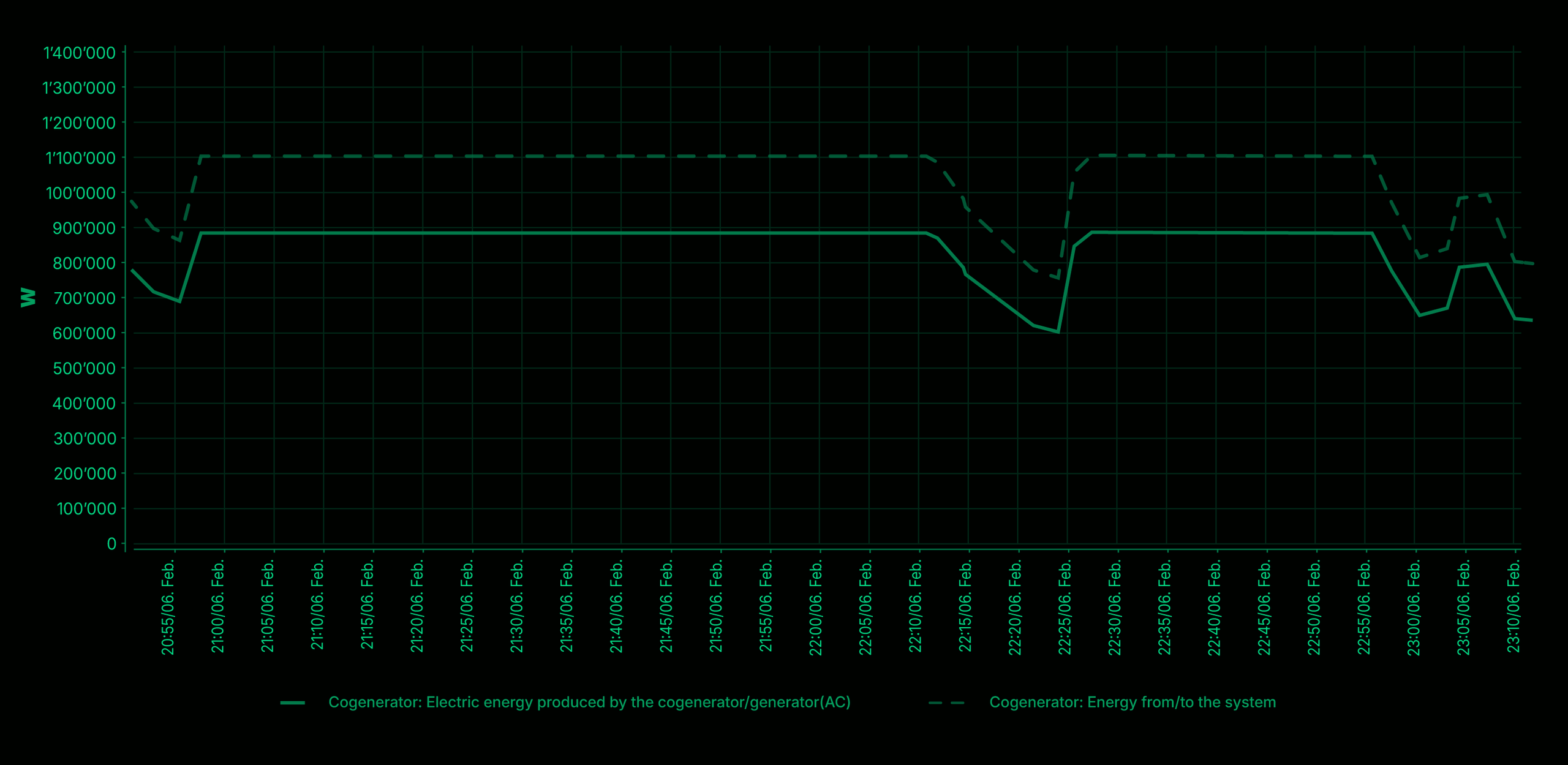
Polysun enables different design variants to be simulated and their operating behaviour to be compared under real operating conditions. Each variant is calculated using the same climate data and load profiles to ensure a fair and traceable comparison.
- Industry and food production: How much of the site’s electricity and process heat can a CHP unit cover? The simulation shows self-consumption, heat utilization and the remaining demand from the grid and boiler.
- District heating: How should a cogeneration plant feeding a heat network be sized – for example at a bio-waste utilisation plant? Polysun determines operating hours, coverage share and the storage needed to balance generation and network demand.
- Hotels: Can one CHP unit supply electricity, domestic hot water and space heating year-round? The simulation shows how hot-water demand keeps the unit running in summer and where a boiler is still needed.
- Residential quarters: How should load be split between CHP and heat pump? Polysun calculates the coverage shares of both generators and the power the heat pump draws directly from the CHP.
Why do customers design CHP systems with Polysun?
Sizing: Finding the right size
- Match CHP output to the real heat demand
- Compare modulating and on/off units
- Size the buffer storage to suit
- Determine operating hours and starts per year

Hybrid plants: CHP, heat pump and boiler in one model
- All heat generators in one annual simulation
- Split base, mid and peak load sensibly
- Use CHP power directly for the heat pump
- Link PV self-consumption with CHP operation

Electricity prices: Aligning operation with the market
- Include electricity price time series in the simulation
- Compare heat-led, power-led and price-driven operation
- Calculate revenue from export and self-consumption

Comparing variants: Supporting decisions with data
- Calculate CAPEX, OPEX and CO₂ for various concepts
- Compare the life-cycle costs of different variants
- Document transparent results for clients
Versatile control options and precise system analysis
Precise control with a wide range of control options, up to freely programmable control strategies. Analysis at any time of the year for all components, such as CHP units, heat pumps, buffer storage and heat networks. How to configure a CHP unit in Polysun Designer is explained in the manual.
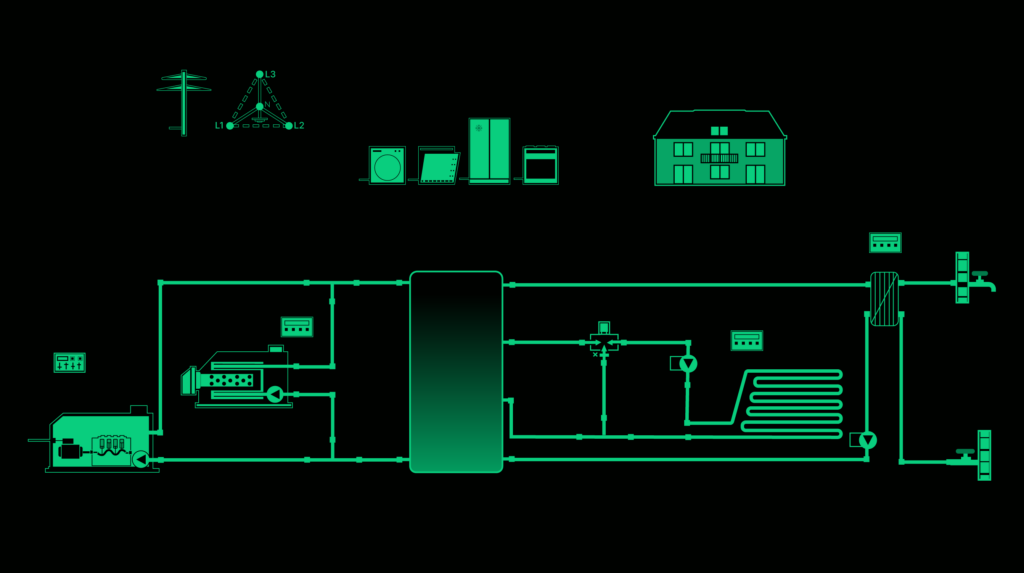
Heat-led operation
The CHP unit follows the heat demand; the electricity covers on-site demand or is exported. Polysun simulates how long the unit runs, how often it starts and what share of the heat demand it covers.
Simulation result: Polysun provides operating hours, starts per year and the CHP coverage share, as well as the matching buffer storage size.
Power-led and price-driven operation
A CHP that runs in high-price hours and pauses when prices are low or negative earns more from the same heat demand. The buffer tank stores the heat until it is needed. With volatile day-ahead prices, time-of-use tariffs and support schemes that increasingly reward flexible operation, this matters more every year. In Polysun, price-driven operation can be modelled with electricity price time series and compared with heat-led operation.
Simulation result: Polysun shows revenue and savings per operating mode, the storage size required, and how often heat could not be used without storage.
Hybrid systems with heat pumps and peak-load boilers
In practice, a combination is often optimal: the CHP covers base load and generates power when it is valuable. The heat pump uses cheap power or CHP power directly, and a peak-load boiler takes over on the coldest days. Polysun simulates these hybrid systems and determines the most cost-effective split. See also heating centres, heat pump sizing and buffer tank sizing.
Simulation result: Polysun provides the optimal capacity split between CHP, heat pump and boiler, and compares the investment and operating costs of the variants.
FAQ
What is a CHP plant simulation?
A CHP plant simulation calculates how a combined heat and power unit operates across a full year, including weather, load profiles, buffer storage and other generators. The result is realistic operating hours, starts, coverage shares and costs instead of a full-load-hour estimate.
Can Polysun determine how large a CHP unit should be?
Yes. Polysun compares different CHP outputs and storage sizes under the same conditions and shows which combination runs long, cycles rarely and achieves the lowest life-cycle costs.
Can a CHP be operated based on electricity prices?
Yes. Price-driven operation can be modelled in Polysun with electricity price time series. The simulation shows the additional revenue compared with heat-led operation and the storage size it requires.
CHP or heat pump: which is better?
Often the combination beats either on its own. The CHP generates power in expensive hours, while the heat pump uses cheap power. A joint simulation of both generators shows the right split.
Can Polysun simulate CHP in district heating networks?
Yes. Polysun simulates CHP units in energy centres for heat networks, together with heat pumps, boilers, storage and network losses. See district energy
Which fuels can be simulated?
Polysun covers natural gas, biogas, oil and wood, among others. Fuel prices and efficiencies are entered per project, so variants can be compared directly.