
Cooling Load Estimation Using Dynamic Building Simulation
Polysun includes a dynamic building simulation for estimating a building’s cooling load. This approach is based on the building’s physical parameters. It is particularly useful when the building’s actual cooling demand is unknown.
The Role of Building Properties
In order to estimate a cooling load based on building properties, these properties must first be defined. Polysun includes a catalogue of buildings with numerous standard types. These can be modified with specific inputs to match the properties of the building in question.
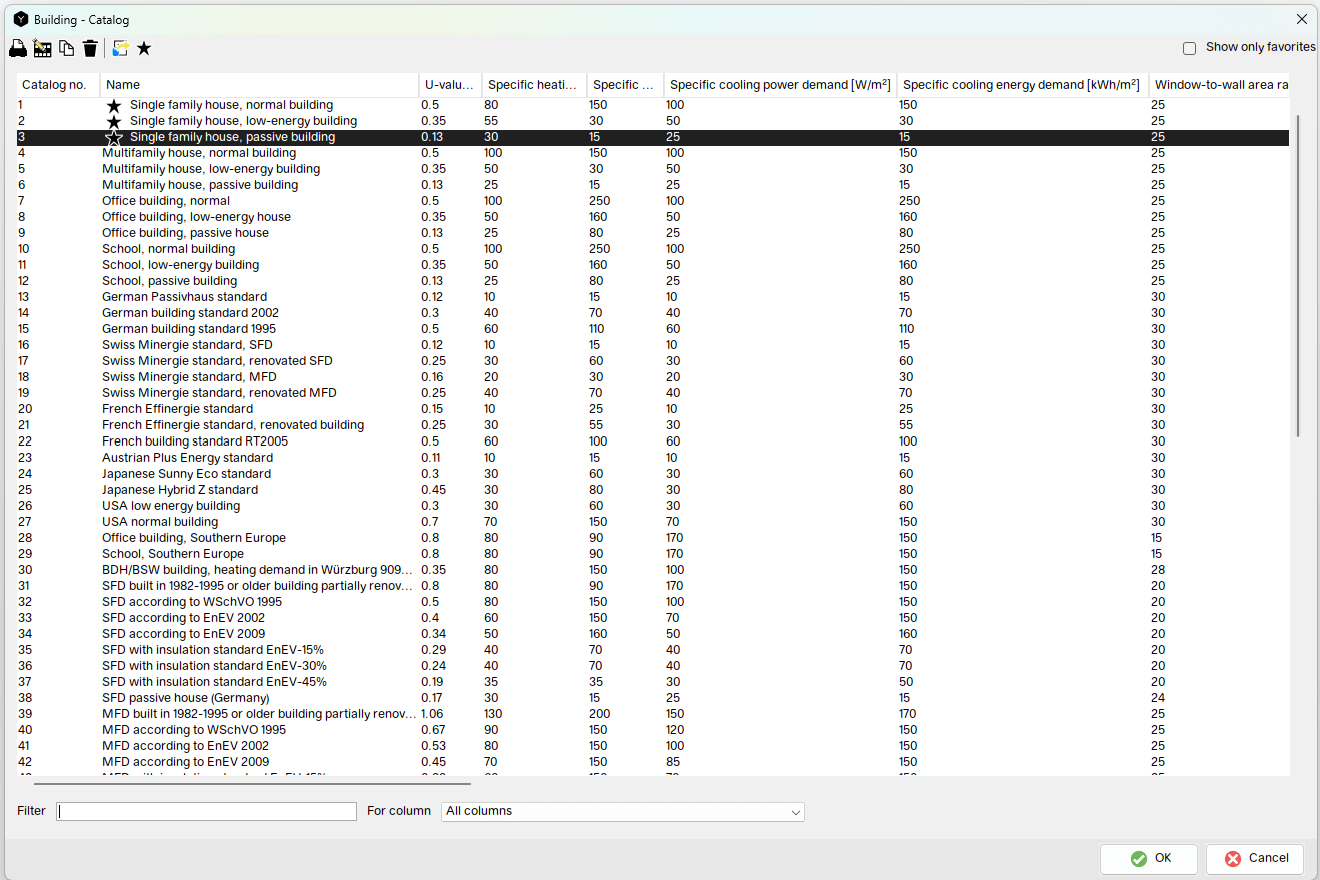
Entering Building Dimensions for Cooling Load Calculation in Polysun
Once the building’s properties, such as U-values, have been defined, the building’s length, width, ceiling height, and number of floors need to be specified. This will determine its size.
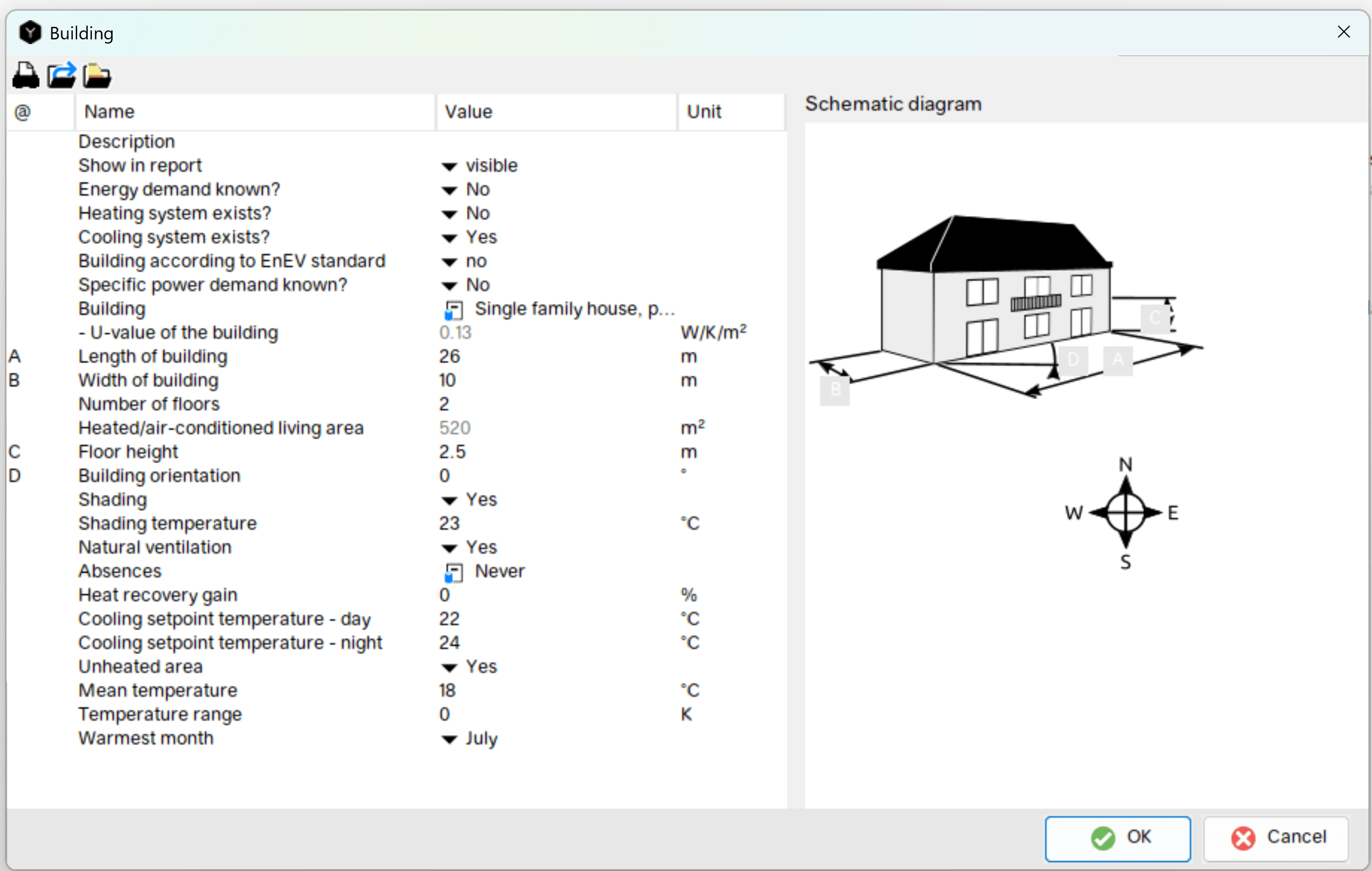
To improve the accuracy of the cooling load estimation, additional information can be provided. This includes shading, natural ventilation, absences, target room temperature and unheated rooms.
Once all parameters are entered, the cooling load is calculated by starting a simulation in Polysun. The results can be viewed and evaluated in various formats, including hourly values. See the example below for results with monthly resolution.
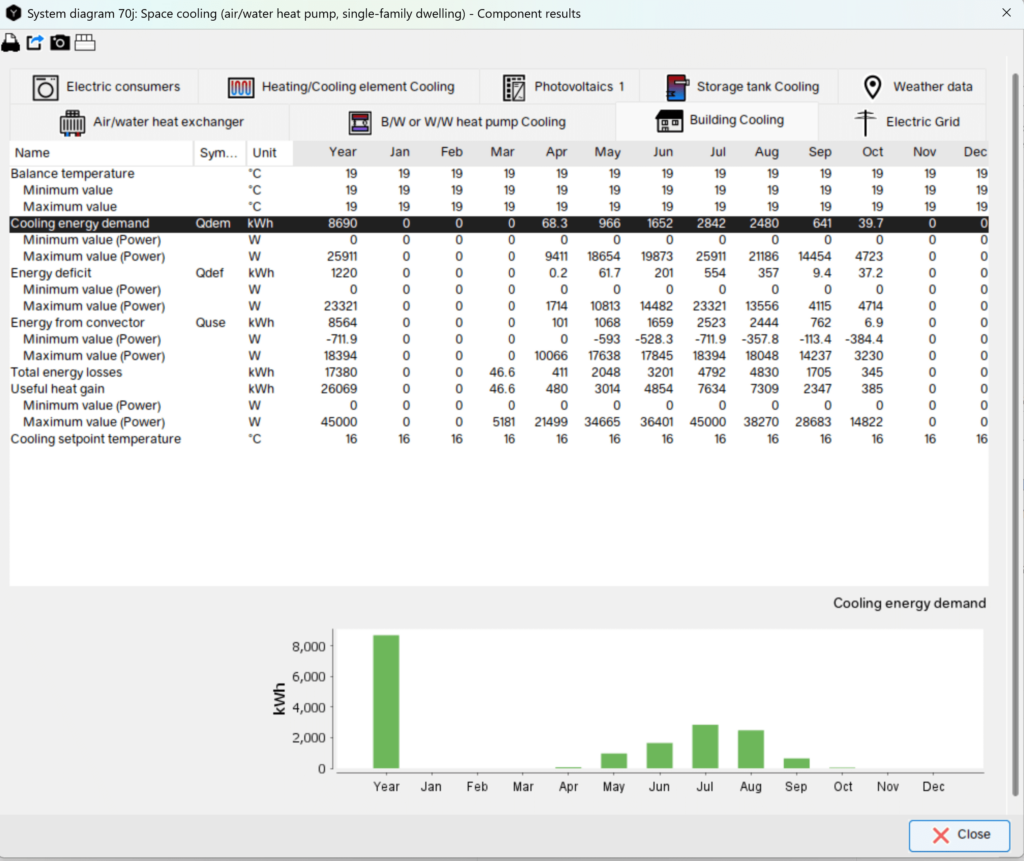
The underlying principles for cooling load calculations largely follow the same formulas as the dynamic heating model. The dynamic cooling model accounts for the same influencing factors—ventilation losses, infiltration losses, transmission losses, solar gains, and internal heat gains. Unlike the heating model, these factors are considered with a positive sign to reflect their contribution to cooling demand.
\(Q_{dem,cooling} = max(0, Q_{loss,vent,set} + Q_{loss,inf,set}+Q_{amb,set}+Q_{solar}+Q_{gain})\)
Energy Deficit
A warning, ‘Building Cooling: Cooling capacity of the system is not met.’ appears if the energy deficit is greater than 0 for longer than 7 hours.
How do I interpret cooling load results for practical use?
Cooling load results, often presented as hourly or monthly values, show the energy required to maintain indoor conditions. Use these to size HVAC equipment, evaluate peak load times, and assess the impact of design changes (e.g., sizing of Chilled Water Buffer Tanks or Heat Pump).
Can historical energy data be used to estimate cooling load?
Yes, historical energy consumption data (e.g., from monthly or annual utility bills or hourly data from smart meters) can be used to estimate cooling loads, particularly for existing buildings. This data can serve as an input to characterize the building in question and provide a foundation for sizing an HVAC system. Learn more about estimating cooling loads from historical energy data here.
How do climate and location affect cooling load calculations?
Climate significantly affects cooling loads. High temperatures and intense solar radiation (e.g., in tropical regions) increase cooling demands, while milder climates require less cooling. Polysun uses global weather data from Meteonorm to support HVAC system sizing. Simply select the project’s location on a map to proceed.